
Tarrant County, TX SWPPP & Stormwater Requirements
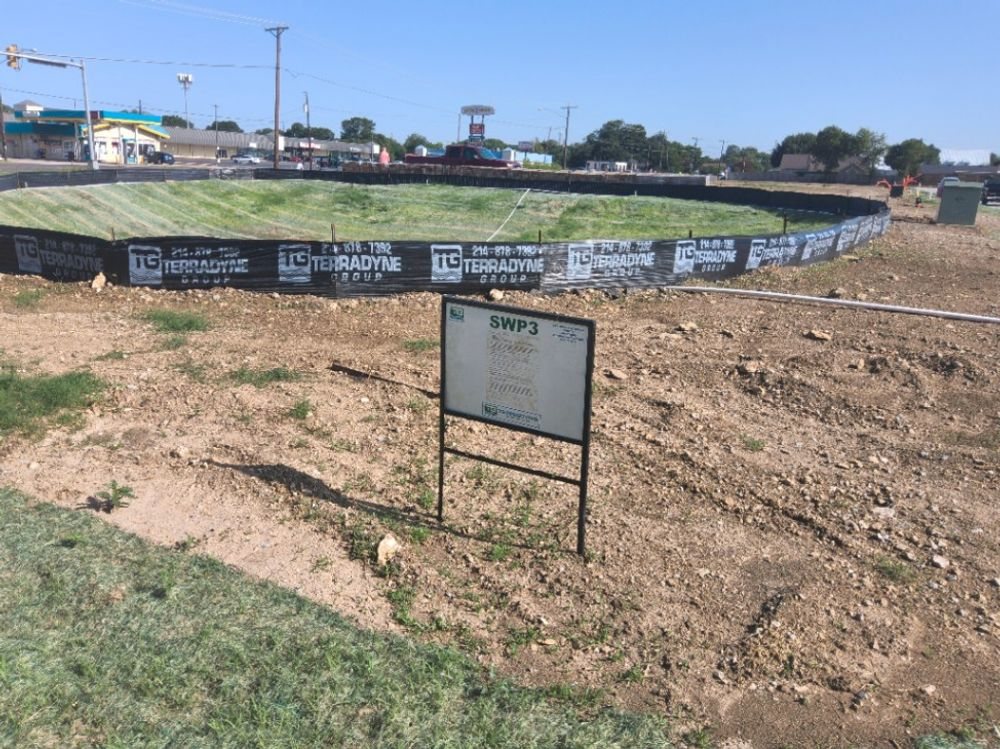
Tarrant County anchors the western half of the Metroplex, and its construction stormwater rules are among the most city-specific in the region. Fort Worth runs a grading-permit program, and its suburbs layer on their own portals, acceptance letters, and posting rules.
What are the SWPPP and stormwater requirements in Tarrant County?
Every Tarrant County construction site works under the state permit: TXR150000 defines small construction activity to include clearing, grading, and excavating that disturb at least one acre and less than five acres. From there the cities diverge - a grading permit in Fort Worth, a portal acceptance letter in Southlake, dual-operator notices in Mansfield.
Where the county fits
On unincorporated Tarrant County land, the state permit generally governs, connected to the county only where the county operates the receiving storm sewer. Two days before commencing construction activities, primary operators must provide a copy of the signed NOI to the operator of any MS4 receiving the discharge and to any secondary construction operator. Inside a city - where most Tarrant County construction happens - the city runs its own review, inspections, and notices.
The cities set the specifics
Tarrant County's construction cities each run a distinct program. Three of the busiest show how far the specifics diverge from the state floor.
Fort Worth. In Fort Worth, land-disturbing activity or platting of 1.0 acre or more — or land disturbance of less than 1.0 acre that is part of a common land plan development — requires an approved grading permit and stormwater drainage study. Fort Worth's city council adopted a grading ordinance in June 2012, under which land alteration in excess of 1 acre requires an approved integrated stormwater management (iSWM) plan grading permit. Full requirements: Fort Worth.
Southlake. Upon review and approval of the SWPPP, the City of Southlake will provide a letter of acceptance via Energov Self Service for use in all permitting processes. In Southlake, once work on the site begins, contractors are required to conduct SWPPP inspections every seven days and upload documentation to Energov Self Service.
Mansfield. In Mansfield, for sites less than 5 acres, a Small Construction Site Notice must be sent to the city and posted on site. In Mansfield, both primary and secondary operators must post a Large Construction Site Notice on site.
Why the deltas matter
Tarrant County rewards checking the city first. The state permit is the floor, but Fort Worth's grading-permit gate, Southlake's portal acceptance letter, and Mansfield's dual-operator posting are the kind of requirements that hold up a permit if they surface late. A plan drawn to the state permit alone can still stall at a city counter, so the governing city is the first thing to pin down on a Tarrant County site.
Frequently Asked Questions
Does Tarrant County review SWPPPs directly?
Not the way a city does. Texas counties do not issue zoning or grading permits for private construction, so on unincorporated Tarrant County land the state permit generally governs, with a copy of the notice going to the county where it runs the receiving storm sewer. The detailed requirements come from the cities.
What makes Southlake's process different?
Southlake routes SWPPP approval through its Energov Self Service portal and issues a letter of acceptance used across permitting, then has contractors upload their inspections to the same portal. It is a portal-driven program from approval through construction.
Why do some Tarrant County sites post two site notices?
In Mansfield, both the primary and secondary operators post a large construction site notice on larger sites - two notices, not one. It is a stricter posting rule than the single-notice approach many operators expect.
Which cities does this guide cover?
Fort Worth, Southlake, and Mansfield - three of the county's higher-volume construction cities - each verified against the city's own published requirements.
Request a bid
Send your Tarrant County project - its city, acreage, and start date - to bids@terradynegroup.com or call (214) 878-7392, and the plan is built to the jurisdiction that actually reviews it. The full jurisdiction map is at Local Compliance.