
Compact Track Loader Services
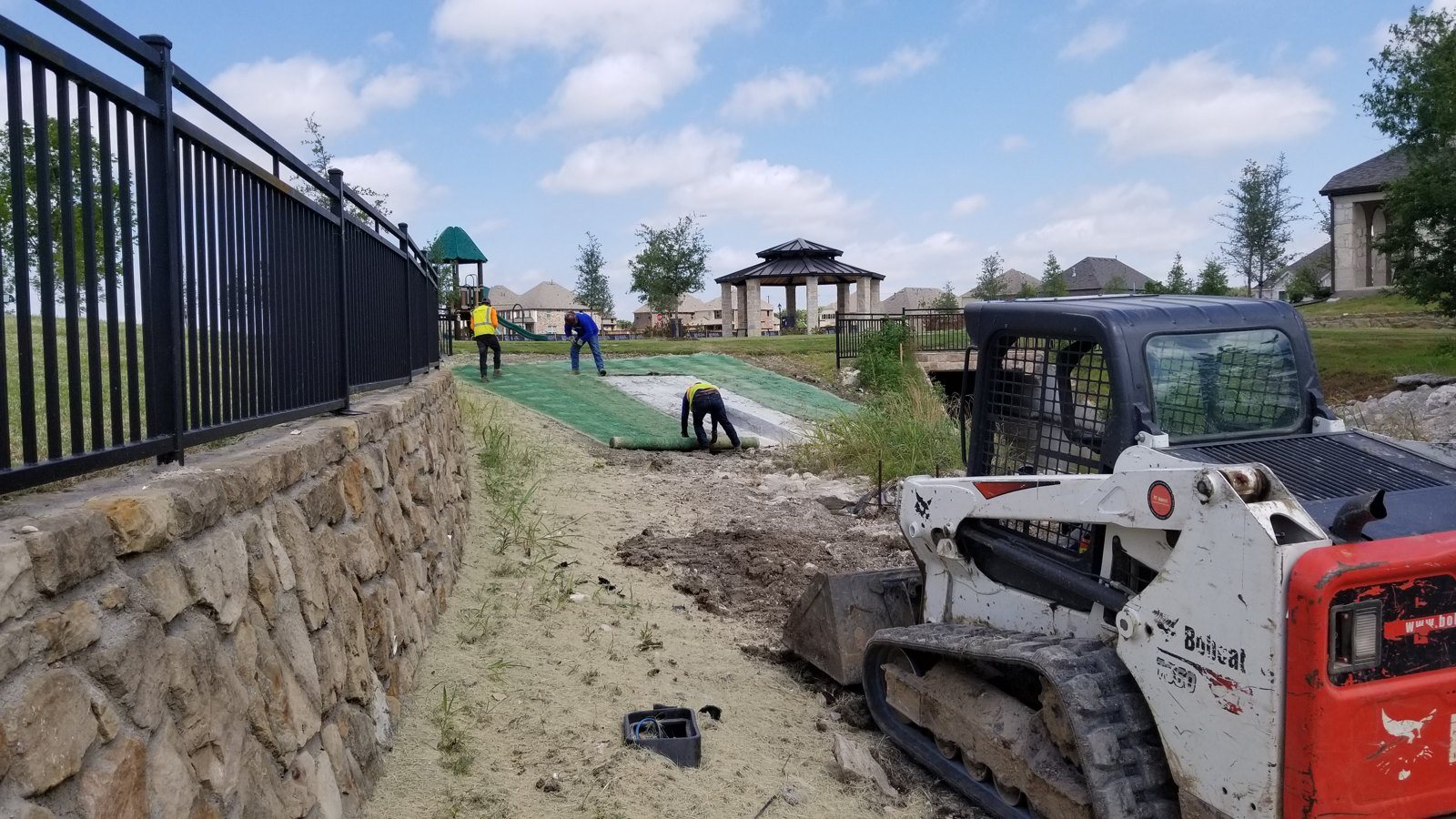
A stormwater program is mostly small, urgent, physical jobs — the crew and the machine that show up between the big scopes are what keep the record clean. Terradyne keeps that capacity on call across Dallas–Fort Worth.
What are compact track loader services?
The labor-and-machine line behind everything else on this site. Terradyne provides a skid-steer with operator for basic grade work. Terradyne runs a skid-steer with sweeper attachment to clean paving as track-out response. One machine, many attachments, and a crew that already knows what a stormwater inspector looks for.
The crew lineup
Terradyne fields dedicated crew work for installation, maintenance, repair, and removal labor — including skid-steer crews that clean accumulated silt from controls. Terradyne's crew lineup includes hand-dug silt fence trenching and brush-clearing crews with skid-steer brush attachments and chainsaws. The common thread: these are stormwater-literate crews. The silt they clean goes where sediment is allowed to go; the trench they hand-dig is a silt fence toe, cut to be inspected.
That literacy is the quiet value of buying labor from an erosion control company instead of a temp agency. A crew that knows why the fence exists treats the fence differently — it gets re-trenched instead of propped, the sediment gets managed instead of pushed around the corner, and the fix survives the next storm instead of the next walkthrough.
Inside the scope and outside it
Terradyne's track machines and crews work inside and outside the erosion-control scope — light grading, stockpile moving and removal, pavement scraping and cleaning, construction debris and trash collection and loading for final walks and project-long housekeeping, minor demolition, and small tree and brush removal. The crew lineup includes dump-truck haul-off and landfill disposal runs. The list reads like odd jobs until the schedule breaks — then it reads like the reason the project called.
The role customers lean on hardest is the void-filler: the pad is rutted, the dirt contractor is gone, and the schedule cannot wait for him to come back. Because Terradyne is on site from the first silt fence to the final walk, the machine that fixes it is usually already nearby — called, mobilized, done.
Why the sweeper matters
Track-out is the finding no site wants — the street tells on you. The sweeper attachment turns a citation-shaped afternoon into an hour of cleanup, which is why it rides the same dispatch list as the erosion control crews — the machine that fixes the entrance pad is the machine that cleans the street the pad failed to protect. The full program lives at Street Sweeping & Track-Out Control.
Frequently Asked Questions
What can a skid-steer crew handle on a stormwater site?
Grade work, stockpile moves, pavement scraping and sweeper cleanup, silt cleaning at the fence line, debris and trash loading with haul-off, minor demolition, hand-dug trenching, and brush clearing — the physical half of a site program, inside the erosion-control scope and outside it. The machine stays; the attachments rotate.
Is this the same crew that installs the erosion control?
It is the same labor family — installation, maintenance, repair, and removal ride one crew-work line. That is deliberate: the crew that installed the fence knows exactly how to fix it.
How fast can a crew mobilize for a track-out problem?
Treat street cleanup as urgent — the finding is already written once the sediment is on public pavement. Call with the location and the crew brings the sweeper.
Request a bid
Send the task list to bids@terradynegroup.com or call (214) 878-7392 for crew and skid-steer work across Dallas-Fort Worth. Grading lives at Minor Grading, and the division hub at Site Maintenance & Field Services.