
Construction Silt & Sediment Removal
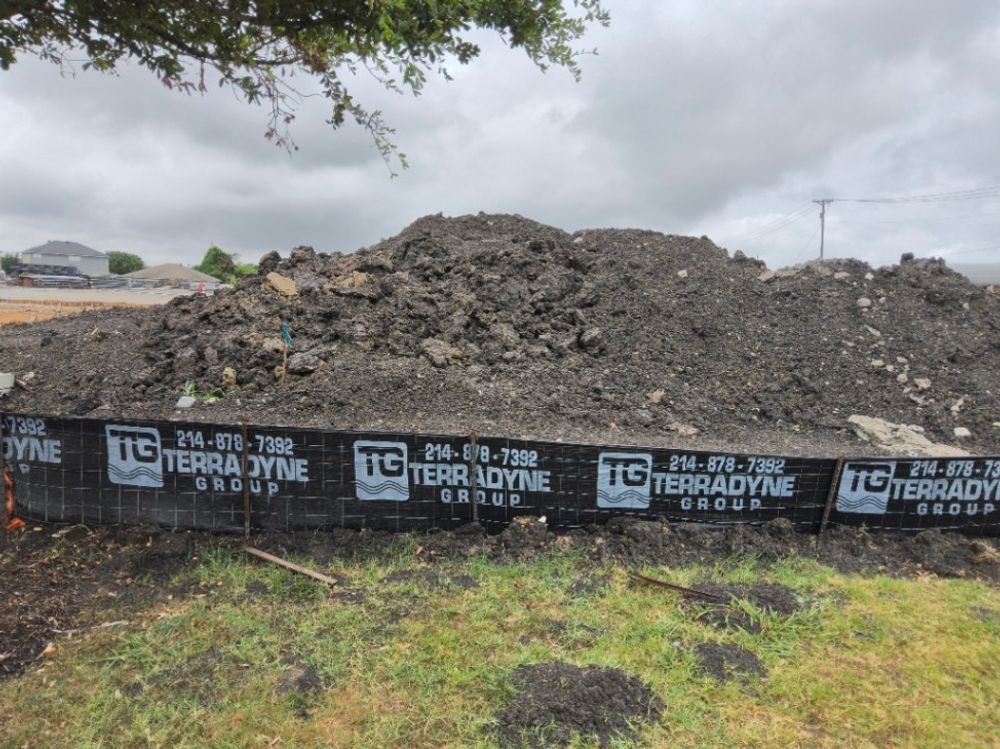
Sediment does not stay where the plan drew it. Storm flow moves it across pavement, down ditch lines, into ponds — and sometimes past the property line.
What does silt and sediment removal cover?
Terradyne removes sediment that has settled on or off the site — from interior pavement, from the public right-of-way and roads surrounding the site, from interior channels, ponds, and ditches, and from off-site discharge points into the MS4 or private property.
Every site has its collection points — the low curb return, the pavement joint that catches each wash, the forebay at the pond inlet, the flat stretch of ditch where the water slows and drops its load. Some of it settles inside the fence line and some of it gets past everybody, and an honest removal scope covers both.
When removal is the permit's own answer
For perimeter controls such as silt fence, TXR150000 requires trapped sediment to be removed before it reaches 50 percent of the control's above-ground height. Sediment must be removed from sediment traps and sedimentation ponds no later than when design capacity has been reduced by 50 percent. Hitting those triggers on schedule is what keeps a control working instead of becoming a finding — removal is routine maintenance work, planned like any other line.
The crew and the machine
Terradyne fields dedicated crew work for installation, maintenance, repair, and removal labor — including skid-steer crews that clean accumulated silt from controls. The same visit can carry the related work: what reaches public pavement runs under Street Sweeping & Track-Out Control, the machine-and-operator side under Compact Track Loader Services, and the upkeep of the controls themselves at BMP Maintenance & Repair. The scope runs from open-pad machine work down to the tight spots a bucket cannot reach. The whole family lives under Site Maintenance & Field Services.
Frequently Asked Questions
Is sweeping the same thing as sediment removal?
Sweeping clears what tracks onto pavement; removal is the bigger dig — the accumulations in channels, ponds, and at discharge points that a broom cannot touch. The two often run together on the same visit.
Can removal be scoped into a standing program?
Yes — it rides the same program as maintenance, sweeping, and machine work, one more line on the visits the site already gets. Scoping it means naming the spots: where sediment collects, how often it should come out, and where it goes when it does.
Request a bid
Send the problem spots to bids@terradynegroup.com or call (214) 878-7392 — silt and sediment removal across Dallas–Fort Worth. Send photos of the problem spots or the drainage sheet, and the scope comes back matched to what actually settled — inside the fence line and past it.