
Stabilized Construction Entrance
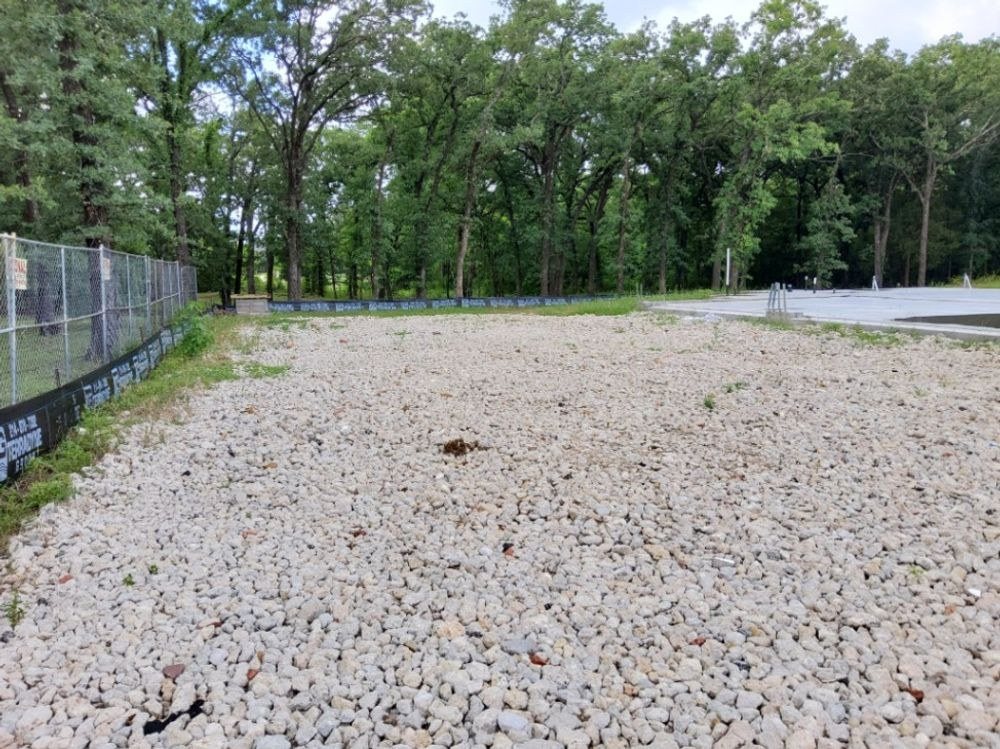
The trail of mud running from a site gate down the public street is the most visible mistake a project can make — the neighbors see it, the city sees it, and it started at the entrance. Terradyne installs and maintains stabilized construction entrances across Dallas–Fort Worth: rock pads that pull mud off tires before they touch pavement, sized to the governing detail and rebuilt when traffic grinds them down.
What is a stabilized construction entrance?
A stabilized construction entrance — also called a construction exit or rock entrance pad — is the rock pad every truck crosses before leaving a jobsite. Terradyne builds stabilized construction entrances as coarse rock pads — typically 3-to-5-inch rock over a geotextile liner — at every site exit.
The requirement behind the pad is statewide. Under the Texas Construction General Permit (TXR150000), permittees must minimize, to the extent practicable, the off-site vehicle tracking of sediments and dust. Track-out control starts at the entrance: a properly sized and maintained pad keeps sediment on site before a street sweeper is ever needed. It is also the first thing anyone — neighbor, buyer, or reviewer — sees on the way in.
Size and spec: what the iSWM detail requires
North Texas plan sets lean on the regional standard detail, and its numbers are specific. The iSWM standard detail for a stabilized construction exit requires a minimum length of 50 feet. Under the iSWM detail, the entrance must be at least 20 feet wide on sites under 5 acres and at least 30 feet wide on sites larger than 5 acres, at every point of ingress or egress. The iSWM detail specifies stone of 3-to-5-inch diameter coarse aggregate and does not allow crushed Portland cement concrete. The iSWM detail requires the entrance's rock pad to be at least 6 inches thick.
Plan an entrance for every point of ingress and egress — including temporary phases and haul routes. Entrance details vary across DFW; confirm which standard detail your jurisdiction enforces before you mobilize. Washdowns have their own rule. When vehicles are washed down before entering a public roadway, the iSWM detail requires the washing be done on a crushed-stone-stabilized area that drains away from both the street and the entrance, with sediment kept out of storm drains, ditches, and watercourses.
How Terradyne builds an entrance
A pad that meets the numbers can still fail if it is thrown down bare — the liner is what separates a working entrance from a rock pile pressed into the mud. Crews across the metroplex know the control as the rock entry pad or the construction driveway; the name changes, the build does not. Terradyne has built and maintained entrances across Dallas–Fort Worth since 1988, on hundreds of active sites across DFW.
The extras are where an entrance succeeds or fails on a real site. Terradyne stacks pre-bagged cold-mix asphalt units into temporary curb ramps at rock entrances. That keeps loaded trucks off the curb line. Where an entrance crosses a bar ditch, Terradyne sets culvert pipe as part of the entrance build. Where a rock pad alone is not enough, Terradyne installs polyethylene FOD anti-track panels in lieu of or atop the rock at construction exits.
Maintenance: top dressing and redress
An entrance is a wear item: every axle that crosses it pushes rock into the subgrade and mud into the voids. The iSWM detail requires the entrance to be maintained so it prevents tracking or flowing of sediment onto paved surfaces — which may require periodic top dressing with additional stone as conditions demand — and requires immediate removal of any sediment spilled, dropped, washed, or tracked onto pavement.
When an entrance's rock voids fill with sediment, Terradyne redresses the pad — re-rocking the existing entrance. If trucks are carrying mud straight onto the street, the pad is usually undersized, unlined, or overdue for a redress — fix the entrance before it becomes a compliance finding. For scheduled re-rocking, see Entrance Redress & Re-Rocking.
Construction exits on TxDOT projects
State roadway work uses its own spec and its own names. On TxDOT projects, Item 506 requires site traffic to leave only at designated construction exits whenever tracking conditions exist. TxDOT long-term construction exits must be built at least 14 feet wide for one-way traffic and at least 20 feet wide for two-way traffic. TxDOT's Type 1 rock construction exit uses 4-to-8-inch crushed aggregate placed at least 8 inches deep. Terradyne builds to the governing item on state work and to the regional detail everywhere else.
The entrance and the sweeper work as a pair
In wet weather, pair the entrance with scheduled street sweeping; no rock pad catches everything. The pad is prevention and the broom is cleanup — most active sites eventually need both. See Street Sweeping & Track-Out Control for the sweeping side, keep the rest of the perimeter tight with Silt Fence Installation, and browse the full Erosion Control division for everything else the plan sheet calls for.
Frequently Asked Questions
How big does a stabilized construction entrance need to be?
Size comes from the governing detail: length and width scale with the site's acreage and its traffic, and every point where vehicles leave the site needs its own pad. Regional plan sets across North Texas set the floor; your jurisdiction may go further, so check the detail on your approved plans.
What is a rock entrance pad made of?
Coarse, angular rock placed over a geotextile liner. The liner keeps the rock from pressing into the subgrade, and the open voids between rocks are what grip tires and pull mud off. Once those voids fill with sediment, the pad stops cleaning and needs a redress.
When should a construction entrance be redressed?
When tires leave the site dirty, the rock looks buried, or the pad has flattened into the mud, it is overdue. Re-rocking an existing entrance restores the voids that do the cleaning — far cheaper than the cleanup and compliance findings a failed entrance generates.
Is a stabilized construction entrance required in Texas?
The construction stormwater permit expects every operator to keep tracked sediment off public pavement, and reviewers look for a stabilized entrance — an SCE, stabilized construction access, or construction driveway on some plan sets — at every active gate. Local details vary, so confirm your jurisdiction's version.
Do state highway projects use the same entrance spec?
No. State roadway work runs on its own specification, with heavier rock, deeper pads, and exit widths set by traffic direction. If your project touches state right-of-way, the specifics are in the state-projects section above; Terradyne builds to whichever detail governs.
Request a bid
Send your site plan to bids@terradynegroup.com or call (214) 878-7392 for a stabilized construction entrance quote. Tell us the acreage, the number of gates, and whether the entrance crosses a curb or a bar ditch, and we will spec the pad, the liner, and the extras in one pass.