
Tree Protection Fencing
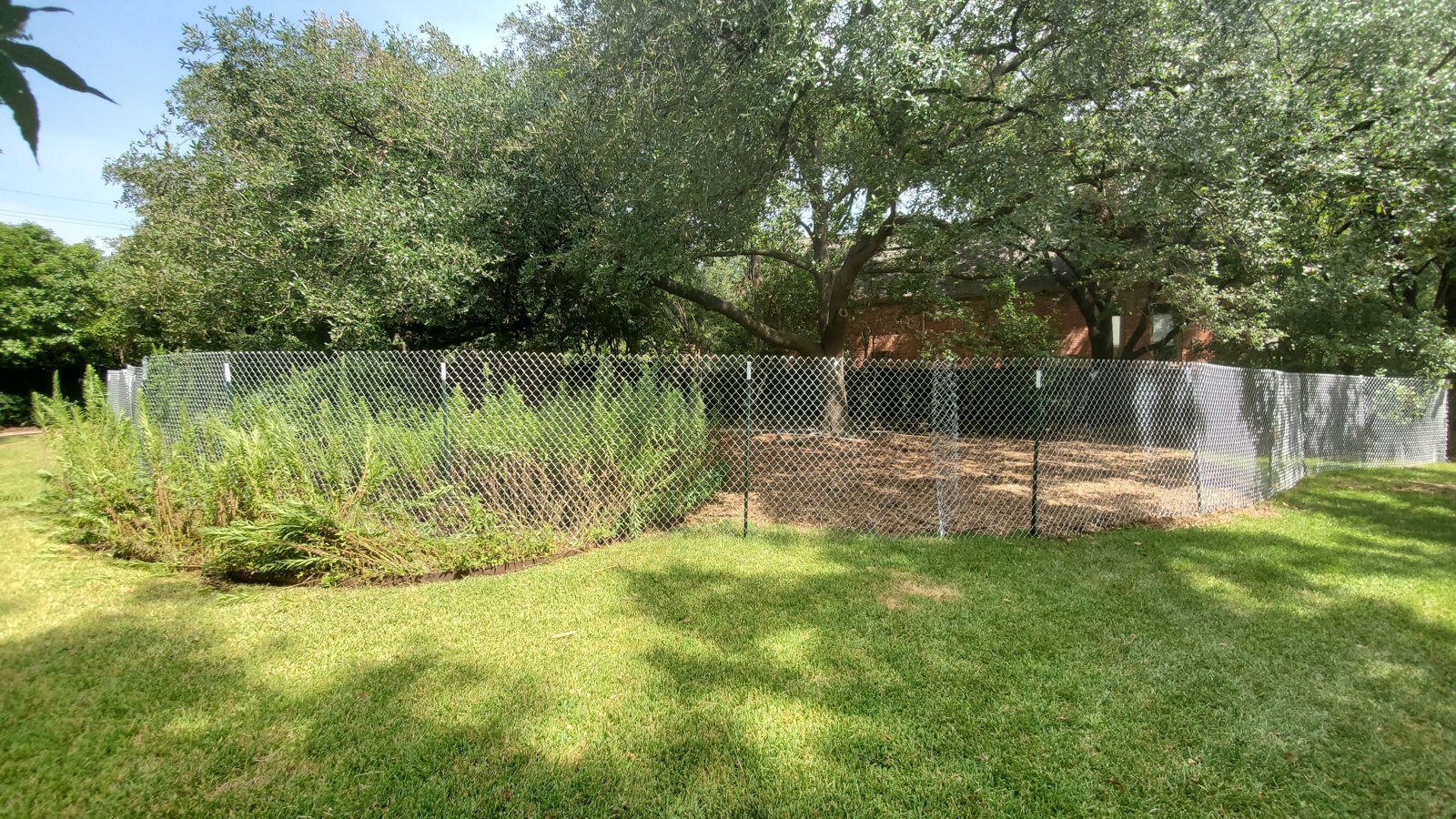
A tree survives construction the way anything does — by keeping the heavy things away from the parts that cannot heal. The fence is for the roots as much as the trunk. Terradyne installs the barriers that make that protection physical, across Dallas–Fort Worth — fence at the drip line, armor at the trunk, and the mulch and signage that finish the scope.
What is tree protection fencing?
The barrier between construction and the trees that must outlive it. Terradyne installs drip-line fencing and trunk protection that keep equipment and stockpiles out of the critical root zone. The fence line is drawn by biology rather than convenience: the canopy above tells you where the roots below cannot take a loaded truck.
The drip-line fence
Drip-line fencing is orange mesh or chain link set at the tree canopy drip line, excluding equipment and stockpiles from the critical root zone. Standard drip-line fencing runs vinyl on T-posts at 10-foot centers, with an upgraded diamond-grade option at 6-foot centers; chain-link options use 11.5-gauge fabric on 0.85-pound-per-foot T-posts at 10-foot centers. The upgrade path exists because sites differ — a quiet infill lot needs a visual boundary; a busy corridor needs a fence that argues back.
The root zone's enemies are invisible on the surface: compaction from surprisingly little traffic, grade changes that smother roots under new fill, trenching that cuts them clean. None of it shows on the trunk right away — the damage can surface long after the project closes. The fence exists because the harm cannot be seen while it is happening — by the time the canopy thins, the argument is over.
Trunk armor and the finishing scope
The trunk takes the hits the fence cannot stop. Trunk armor is 2-by-4-by-6-foot boards wired vertically around the trunk, sized by trunk diameter, with a foam-cell wrap option for high-value trees. Root-zone mulch beds and tree-protection signage round out the scope. Together the package covers the roots that compact, the bark that scars, and the soil that suffocates under spoil piles.
The order of operations
Tree protection is sequencing work: survey first, fence before clearing, and the line held until the last machine leaves. A fence that goes up after grading has already lost the fight — compacted ground does not loosen itself, and crushed roots do not un-crush. The barrier belongs in the first mobilization, ahead of every scraper.
The rules behind the fence
Tree-preservation rules are a city-by-city affair; read the ordinance before the first machine arrives, because a protected tree damaged is a problem no schedule survives cleanly. The survey, the barricades, and the inspections that cities layer on protected trees vary block by block — which is why the fence goes up with the ordinance in hand, not from habit.
Frequently Asked Questions
Where does tree protection fencing go?
At the canopy drip line — the ground-level projection of the branches — keeping traffic off the critical root zone inside it. Equipment, stockpiles, and washout stay outside the line for the life of the job.
What is trunk armor?
Boards wired vertically around the trunk, sized to the tree's diameter, with a foam-cell wrap option for high-value specimens. It takes the scrapes and impacts that reach past the fence.
Vinyl or chain link?
Traffic decides. Standard vinyl on wider post centers marks the line; diamond-grade on tighter centers or chain link stands up to sites where the line will be tested. The upgrade is a durability call, not a cosmetic one.
Whose rules govern protected trees?
The city's — tree-preservation requirements vary by jurisdiction. Read the ordinance before mobilizing, and walk the fence line with the tree survey in hand; a damaged protected tree is an expensive education.
Request a bid
Send your tree survey or landscape plan to bids@terradynegroup.com or call (214) 878-7392 for tree protection fencing across Dallas-Fort Worth. The rest of the family lives at Tree & Site Protection, the security side at Safety & Chain-Link Fencing, and tree identification at Tree Survey & Identification.