
TxDOT Heavy-Duty Silt Fence (Item 506)
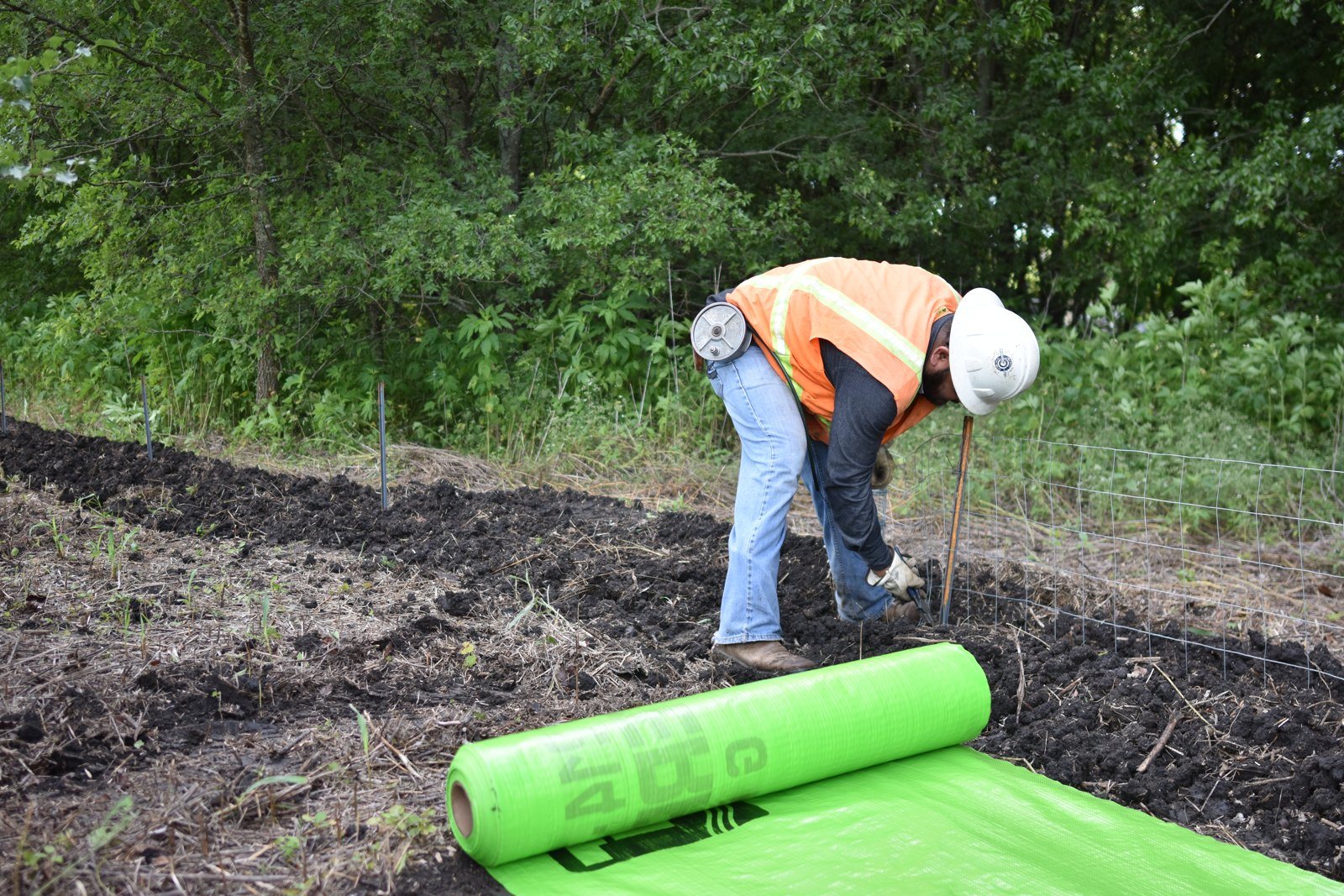
Heavy-duty is not a marketing word here — it is a materials list: heavier posts, heavier wire, heavier fabric, each one written into the state's book. Terradyne builds silt fence to the state's temporary sediment control fence specification for roadway, utility, and public work across Dallas–Fort Worth — and for any private project whose engineer wants the heavier section.
What is TxDOT heavy-duty silt fence?
The state-spec version of the everyday perimeter control. TxDOT's Item 506 temporary sediment control fence is a net-reinforced fence using woven geotextile fabric — and logos visible to the traveling public are not allowed. Every component is specified — fabric, posts, wire, and the install geometry.
That completeness is exactly why engineers reach for the spec when an ordinary fence keeps failing: nothing about the build is left to the low bidder's judgment.
The materials, by the book
Fabric materials are provided in accordance with DMS-6230, TxDOT's temporary sediment control fence fabric specification. Steel posts for the fence are T- or L-shaped with a minimum weight of 1.25 pounds per foot. Net reinforcement is at least 12.5-gauge galvanized welded wire mesh, with a maximum opening size of 2 by 4 inches, at least 24 inches wide, unless otherwise shown on the plans. Heavier than the commercial standard on every axis — and matched by the build Terradyne runs. Terradyne's TxDOT-spec silt fence build runs 12.5-gauge 2-by-4 wire, heavy 1.25-pound-per-foot posts, and 100-gram fabric. For comparison, the everyday baseline: Terradyne's standard silt fence build is 70-gram woven fabric with 16-gauge 4-by-4 wire backing on metal T-posts at 8-foot centers.
The install, by the book
Where the fence goes is specified before how it stands. Item 506 places temporary sediment-control fence near the downstream perimeter of a disturbed area to intercept sediment from sheet flow, incorporating the fence into erosion-control measures used in areas of higher flow. The posts do more than hold fabric. Posts are embedded at least 18 inches deep — or adequately anchored in rock — at a spacing of 6 to 8 feet, installed on a slight angle toward the runoff source. And the toe is the part inspections find first. Trenches are dug along the uphill side of the fence to anchor 6 to 8 inches of fabric, with a minimum trench cross-section of 6 by 6 inches. Deep posts, an angled line, a trenched toe: the install is drawn, not improvised.
Reading the spec on a bid
Estimators meet this fence as a line item with a book behind it, and the book answers the arguments before they start: which wire, which posts, what depth, what trench — all determined, with the plans holding the only override. That determinism is the bid's friend. The heavy-duty line prices consistently because the build cannot quietly thin out between bid day and install day, and the inspection that follows has the same book open.
Beyond the right-of-way
The same build travels well beyond state right-of-way: where a civil engineer wants a fence that outlives a hard season, the state spec is the shorthand. The heavy build is the one engineers specify when the fence must outlast seasons rather than weeks. A site that has replaced the same run of commercial fence twice already knows why the heavy section exists.
Frequently Asked Questions
What makes Item 506 fence heavy-duty?
The materials list: net reinforcement of galvanized welded wire at a specified gauge and opening size, steel posts at a specified minimum weight, and fabric governed by its own state materials specification. Each element outweighs the everyday commercial build.
Where must the posts and toe go?
Posts embed deep — or anchor in rock — at specified spacing, angled slightly toward the runoff source; the fabric toe anchors in a trench on the uphill side. The geometry is written into the spec rather than left to the crew — depth, spacing, angle, and trench section are all drawn.
Can logos go on TxDOT fence?
No — logos visible to the traveling public are not allowed on that work. Terradyne supplies silt fence fabric printed with the customer's logo, by the roll. Private and commercial projects are where the branded perimeter belongs.
Is heavy-duty fence only for TxDOT jobs?
No — the spec is a shorthand any engineer can call for. Long-duration perimeters, high-traffic sites, and fences that have already failed once are the classic private-work reasons to specify it.
Request a bid
Send your roadway or utility plans to bids@terradynegroup.com or call (214) 878-7392 for heavy-duty silt fence built to the state book. The everyday build lives at Silt Fence Installation, branding options at Branded Silt Fence, and the post hardware at Metal T-Posts & Caps.