
Tree Protection Clearing & Under-Brushing
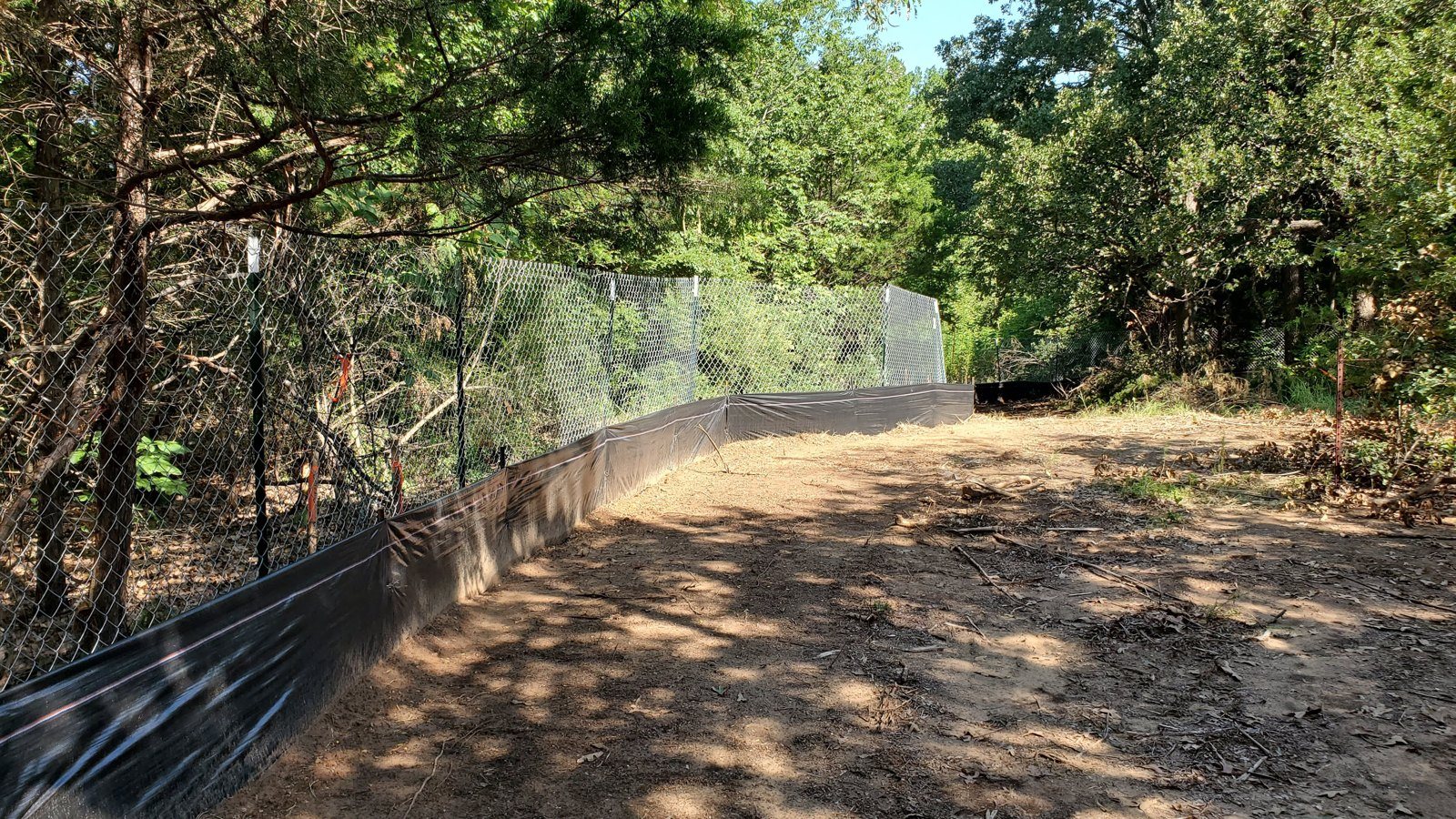
Before a tree-protection fence can go in, something has to make room for it - and on wooded ground that room is rarely already there. Terradyne makes it, and stops exactly where the plan says the protected trees begin.
What is tree-protection clearing?
Terradyne's tree-protection clearing is selective under-brushing that opens a workable zone for tree-protection fencing along a protected tree's drip line, leaving the keeper trees standing. Terradyne fields a crew with equipment to clear pathing and drip lines. The pass stops at the drip line, not in the canopy.
The work is scoped to the brush and undergrowth in the way of the fence, never the canopy the fence is there to protect. On a wooded lot that distinction is the whole job - clearing enough to reach the drip line, and not one blade further.
What it is not
Any tree removal is incidental, done only where a single tree blocks required access to where the crew has to work; this is not a tree-felling or mass-tree-removal service. The crew is brush-scoped. The trees the plan promises the city will still be standing at closeout are the reason the fence exists in the first place, so they are the last thing that comes out, never the first.
Why clear to the drip line
The fence line is not arbitrary. Tree-protection fencing is installed at the tree canopy drip line to exclude equipment and stockpiles from the critical root zone. Clearing to that line, and no further into the canopy, is what lets the fence sit where it belongs on the first pass - no second mobilization to move it, no root zone compacted by a machine that wandered in too far.
Where it fits in the sequence
Clearing is the middle step, not the first. The survey identifies the trees and the paths before a blade touches the ground; the clearing opens the drip lines the survey mapped; the fence goes on the cleared line. Run the survey, the clearing, and the fence in that order, and each crew works off the one before it instead of guessing. The identification side lives at Tree Survey & Identification, and open-ground clearing at Large-Acreage Mowing & Clearing.
Frequently Asked Questions
What is under-brushing?
The first cut under and between the trees - taking out brush and undergrowth while leaving the keepers standing. On a protected site it is how a drip line becomes reachable, so the tree-protection fence can be set on the right line instead of guessed at through the brush.
Does Terradyne remove trees?
Not as a service. The scope is brush and undergrowth; any tree that comes out does so only because it blocks the access the crew needs, never as a felling or land-clearing offer. The trees the plan protects are the point of the work.
Why clear only to the drip line?
Because that is where the fence goes, and the fence is there to keep equipment and stockpiles off the critical root zone. Clearing past it would defeat the purpose - the goal is a workable perimeter around the tree, not an open lot.
What should happen before the crew mobilizes?
The tree survey and the fence plan, reconciled. Knowing which trees stay and where their drip lines fall turns clearing from guesswork into a measured pass, and keeps the fence crew from waiting on a path that was never opened.
Request a bid
Send your tree plan and site access to bids@terradynegroup.com or call (214) 878-7392 for tree-protection clearing and under-brushing across Dallas-Fort Worth. Pair it with Tree Survey & Identification, and the division hub at Site Maintenance & Field Services.