
SWPPP Narratives & Documentation
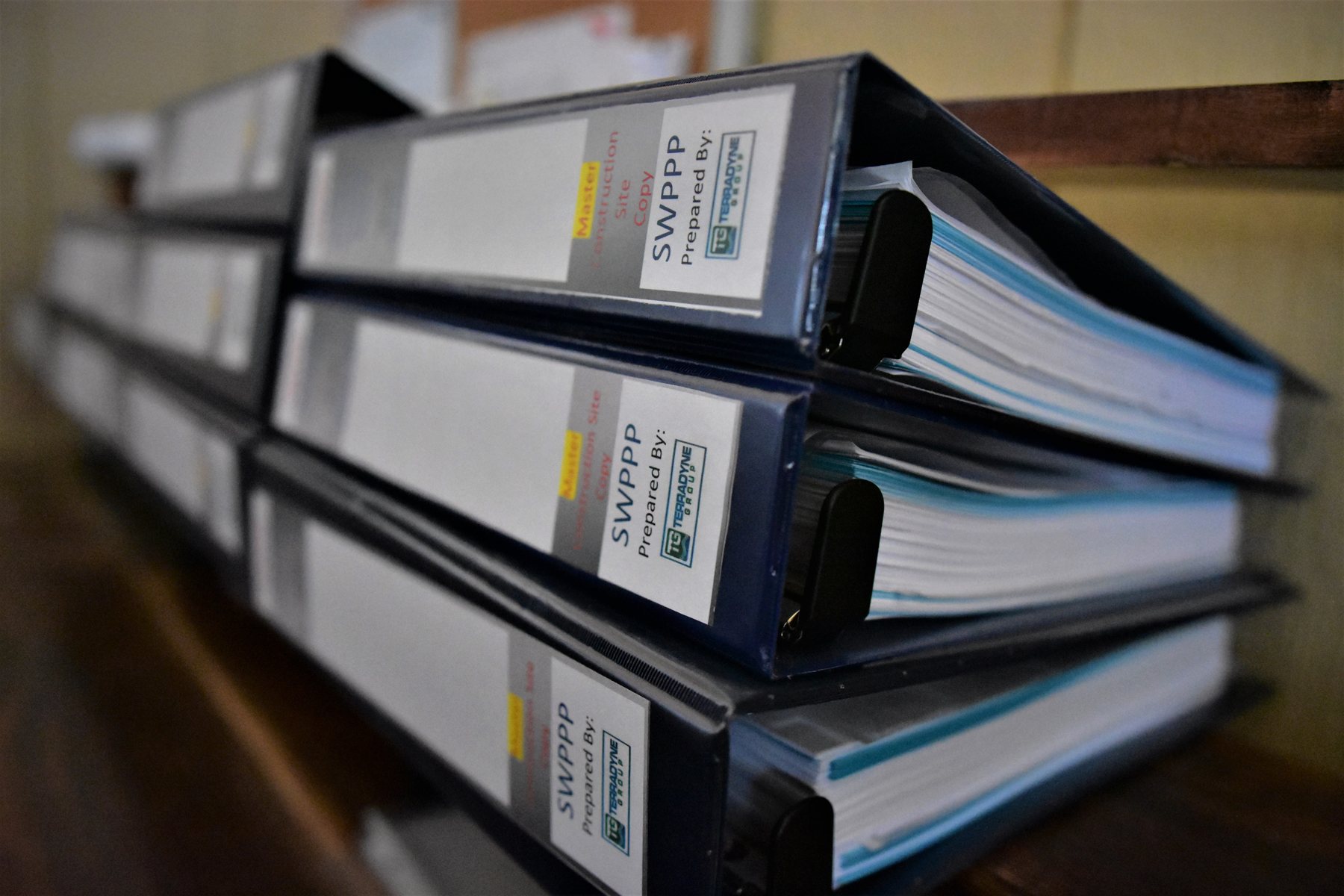
Every requirement on a construction site eventually becomes a document — the plan, the maps, the logs, the amendments. This hub is where Terradyne keeps all of that paper right. The plan is written once but lives for the whole job — mapped, logged, amended, and reviewed until the ground is stable and the record closes clean.
What does SWPPP documentation cover?
Everything the plan requires on paper, from first draft to final record. Under TXR150000, the SWP3 must be prepared prior to obtaining authorization under the general permit, and implemented prior to commencing construction activities that result in soil disturbance. Terradyne writes the plan, draws its maps, keeps its logs honest, and amends it when the site changes.
The five desks
SWPPP Narrative & Manual Preparation — the plan itself: a site-specific narrative built from your civil set, with the permit forms prepared alongside it. Start here if the project is new.
SWPPP Site Maps & Erosion Control Schematics — the exhibit reviewers actually open. Where the controls are, where the water goes, kept current as phases move.
SWPPP Log & Record Audits — the recovery desk for binders that drifted: inspection logs, rain logs, and amendments cleaned up before someone with a badge asks for them.
SWPPP Addendum & Re-Permit — the change desk. When the design, the operators, or the permit cycle itself changes, the paper follows the dirt from here.
Third-Party SWPPP Manual Review — a second set of eyes on a plan someone else wrote, measured against what the permit actually requires.
Start with the narrative if the project is new, the audit if the binder has drifted, and the addendum desk when the dirt no longer matches the plan.
Why the paper matters
The TPDES Construction General Permit TXR150000 is effective March 5, 2023 through March 5, 2028. Every plan, map, and log this desk produces is built to hold up for that whole span — through inspections, through audits, and through the closeout that ends the record. The filings themselves — opening coverage, correcting it, closing it — live under SWPPP Permitting, and the field work that fills the logs lives under SWPPP Inspections.
Frequently Asked Questions
Which documentation service do I start with?
New project: the narrative desk, which produces the plan and its forms as one package. Existing project with a messy binder: the audit desk. Site changed since the plan was written: the addendum desk. Plan written by someone else: the review desk.
Who keeps the plan current once construction starts?
Keeping it current is part of running the site, and the paperwork rides easiest with the team already inspecting it. Amendments, log entries, and map updates follow the inspection cadence — which is why documentation and inspections work best under one roof.
What happens to the documents when the project ends?
The record outlives the ribbon-cutting. Closeout paperwork retires the coverage, and the binder — plan, logs, reports, and forms — has to survive as the proof of how the site was run. The audit desk builds binders that close clean.
Beyond the Metroplex
Terradyne prepares SWPPP narratives and documentation remotely for projects beyond Dallas–Fort Worth, including the greater Houston and greater San Antonio areas. The field program stays DFW; the paperwork travels — same narrative discipline, delivered to the project wherever it sits.
Request a bid
Send your plan set or existing binder to bids@terradynegroup.com or call (214) 878-7392 and the documentation comes back ready to hold up. Tell us where the project stands — not yet permitted, mid-build, or headed to closeout — and we will point the right desk at it.