
Large-Acreage Mowing & Clearing
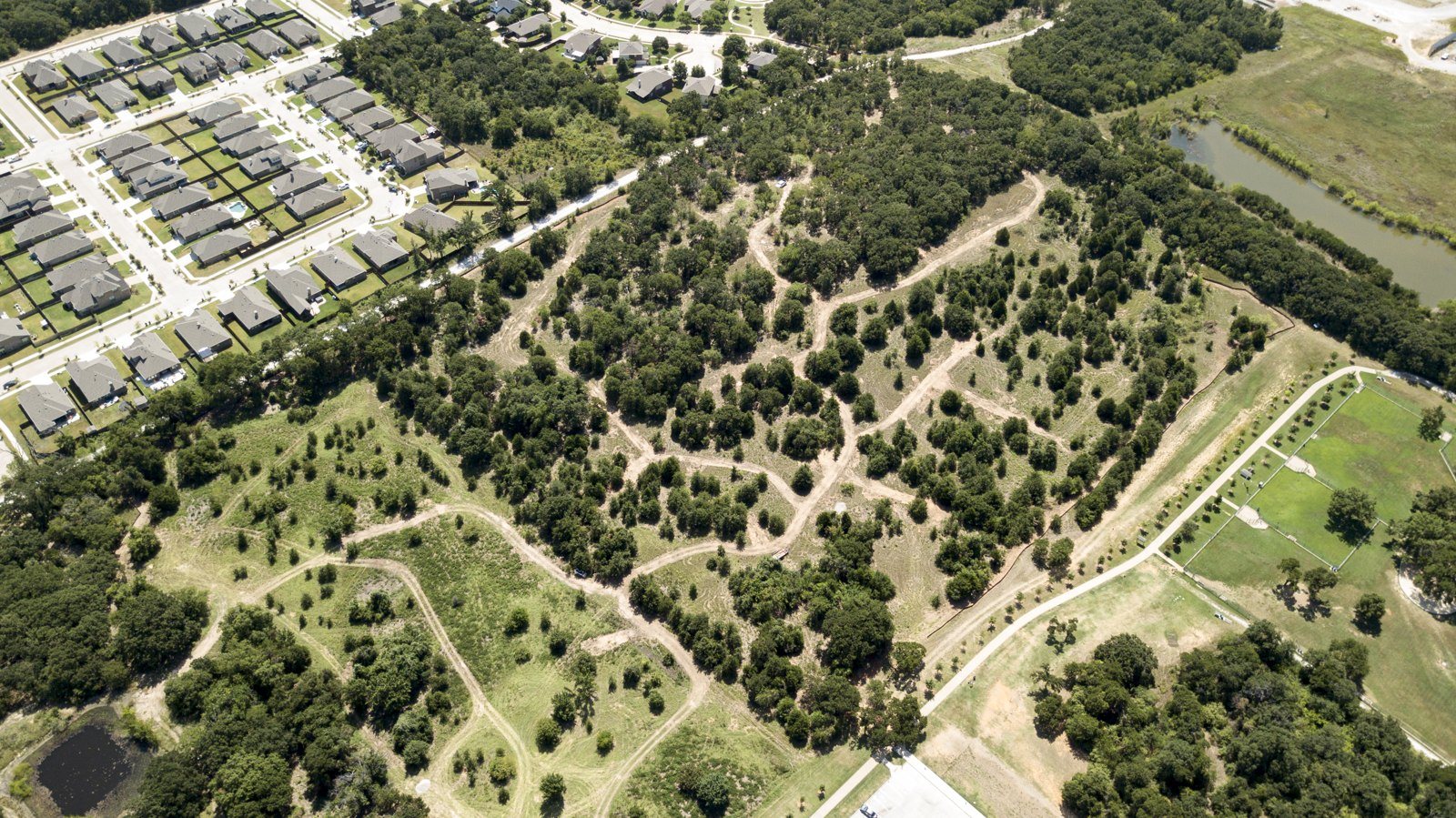
Raw acreage does not stay raw politely — brush closes paths, hides grade breaks, and swallows survey work. Clearing is how a big tract becomes a workable site. Terradyne clears that ground across Dallas–Fort Worth and beyond. One boundary up front: Terradyne mows for its construction client base only — this is not a residential or commercial lawn service.
What does large-acreage work include?
Two crews for two kinds of ground. Terradyne mows and weeds lots with two-man crews running tractor, brushhog, and power weeder. Terradyne clears brush with crews running skid-steer brush attachments and chainsaws. Between them sits the whole job: the open acreage that mows, and the grown-up ground that has to be cut, cleared, and hauled before anyone calls it mowable.
The machinery of it
Terradyne runs brushhog rotary cutters — on tractors and skid-steers — for heavy vegetation mowing. On big ground the machine choice is the schedule: a tractor covers open acres at a pace no smaller machine matches, while the skid-steer takes the fence lines, the thickets, and the ground too rough or too tight for the tractor to work.
Underbrushing and the first pass
The first pass over raw acreage — underbrushing, in the trade's word for it — is discovery work as much as cutting: grade breaks, old fence wire, wet spots, and the terrain the aerial photo smoothed over all surface on the first pass. That is worth knowing when sequencing a project, because the survey, the tree work, and the erosion control plan all get easier on cleared ground. The tree side lives at Tree Survey & Identification.
Disposal is the other half of the clearing conversation. Cut material has to go somewhere — hauled, piled for later handling, or left in windrows by agreement — and the answer shapes the price more than the cutting does. Settle it before the crew mobilizes and the bid holds; leave it vague and the change order writes itself.
Routine mowing, folded in
Routine site mowing is the same line in smaller strokes. Terradyne's mowing lineup runs from two-man tractor crews with brushhog and power weeder, through tractor and skid-steer brushhogs and zero-turn mowers, to power weed eaters worked around posts and fence lines. Mowed ground is also compliance ground: cut grass keeps the silt fence, the inlets, and the whole control picture visible enough to inspect and maintain. Terradyne's mowing items carry a not-responsible-for-damage-to-survey-stakes exclusion. Flag your stakes before the crew arrives — mowers and stakes share the same grass.
Frequently Asked Questions
Do you mow residential or commercial lawns?
No. Terradyne's mowing serves its construction client base — active sites, holding lots, and project acreage. It is not a lawn service, and homeowner or storefront mowing is outside the scope.
What is the difference between mowing and clearing?
Mowing maintains ground a machine can already cross; clearing makes ground crossable — brush cut out, undergrowth taken down, the cuttings handled. The crews are built for both kinds of ground.
What is underbrushing?
The first cut under and between the trees — taking out brush and undergrowth while leaving the keepers standing. It is how wooded acreage becomes walkable, surveyable, and plannable.
How should I prepare acreage for a clearing bid?
Know your boundaries, your access points, and what should be left standing. Aerials help, but expect the ground to hold surprises — pricing conversations go fastest when access and disposal expectations are stated up front.
Request a bid
Send your acreage, access points, and disposal expectations to bids@terradynegroup.com or call (214) 878-7392 for large-acreage mowing and clearing across Dallas-Fort Worth. The division hub lives at Site Maintenance & Field Services.