
Dewatering Services
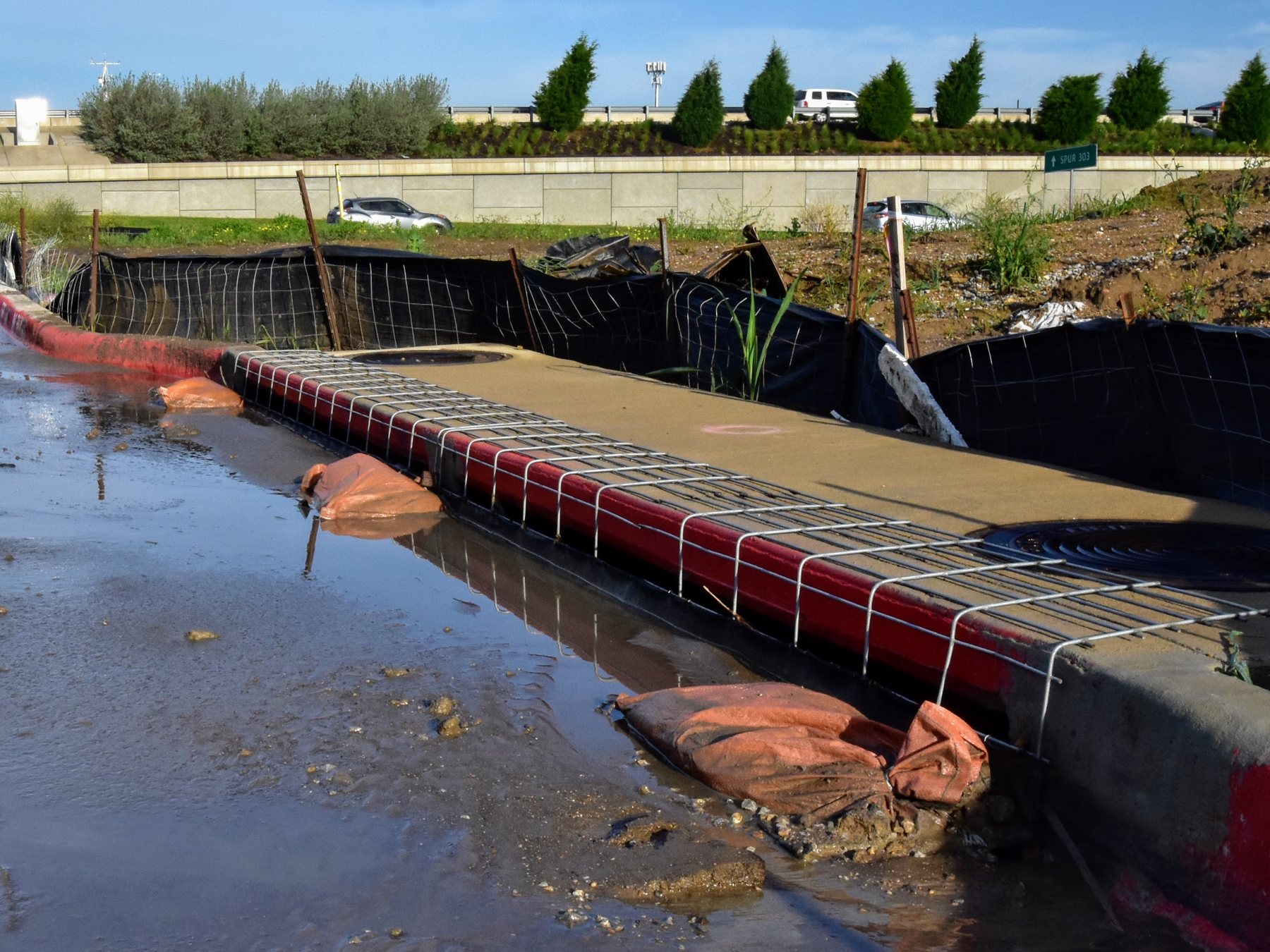
Every excavation in North Texas eventually holds water — a storm fills the pier holes, the water table finds the utility trench, and the pond that was designed to catch runoff has to be emptied to build the outfall. The water has to leave, but it cannot leave dirty. Terradyne runs construction dewatering across Dallas–Fort Worth and Texas: the pumps, the controls on the discharge end, and the daily eyes the paperwork expects.
What is construction dewatering?
Construction dewatering is the controlled pumping-out of the groundwater and trapped stormwater that collect where the work is happening. Under TXR150000, dewatering is the act of draining accumulated stormwater or groundwater from building foundations, vaults, trenches, and other similar points of accumulation.
No controls, no discharge
The permit does not treat pumped water as an afterthought. TXR150000 prohibits discharges from dewatering activities, including dewatering of trenches and excavations, unless they are managed by appropriate controls to address sediment and prevent erosion. A hose over the silt fence is not a control — it is the violation photographed from the street. And once a compliant discharge is running, it has to be watched. TXR150000 requires site personnel to observe and evaluate dewatering controls at least once per day on days when dewatering discharges occur. Groundwater and trapped stormwater do not wait on the schedule — when an excavation fills, the water has to go somewhere, and pumping it straight to the street or the creek is the fastest way to turn a nuisance into a violation.
The filter bag route
The workhorse control for pumped water is the dewatering filter bag — the pump discharges into the bag, the bag holds the sediment, and clear water seeps out the sides. The iSWM construction-control standard details include a standard detail for dewatering controls. The bag is the control most sites reach for first because it moves with the pump, sets up in minutes, and shows its work: what leaves the bag is water you can look at. The full specification lives on our Dewatering Filter Bags page, down to the fabric and the underlayment.
Skimmers: draining a basin from the top
Sediment basins and detention ponds hold the dirtiest water at the bottom and the cleanest at the top, and the permit knows it. Unless infeasible, TXR150000 requires outlet structures that withdraw water from the surface when discharging from sedimentation basins and impoundments. That is exactly what a skimmer is for. Terradyne installs the Faircloth Skimmer, a floating surface-outlet dewatering device that drains a sediment basin from the cleanest water at the surface at a controlled rate. The floating intake rides down with the water level, so the basin empties from the top over days instead of flushing its sediment load out the bottom in an hour.
Running it clean
Terradyne sets up the pumps, bags, and skimmers, then keeps them observed and documented while the discharge runs. The difference between a dewatering operation and a dewatering finding is usually not the hardware — it is whether anyone walked the discharge point today, and whether the answer is written down. A discharge that runs unwatched over a weekend is how a torn bag pumps a driveway full of silt with nobody to shut it off.
What failure looks like at the discharge end
Dewatering findings are rarely about the pump — they are about the last stretch of hose. A torn bag that keeps pumping turns the discharge point into a sediment delivery system, faster than any sheet-flow erosion the rest of the site could manage. A hose that slipped its spout runs raw water across whatever was downhill of it. A basin drained from its bottom valve sends a whole season's trapped sediment downstream in an afternoon, undoing the very thing the basin was built to do. And the quietest failure is the pump that ran all weekend with nobody on site — whatever went wrong on Friday night had two full days to write itself onto the neighbor's property. The fixes are unglamorous: walk the discharge while it runs, keep a spare bag staged, and shut the pump down when nobody can watch it. That is the difference between dewatering as a scope item and dewatering as the finding that headlines the next inspection.
Frequently Asked Questions
When is pumped water allowed to leave a construction site?
Only through a working control on the discharge end — a filter bag, a basin with a proper outlet, or an equivalent measure — and only while someone is checking it. Pumping straight to the gutter or the creek is prohibited, controls or not installed.
What is a dewatering filter bag?
A sewn geotextile bag the pump discharges into. Sediment stays inside the bag while filtered water seeps out through the fabric. When the bag fills, it is swapped out and the trapped sediment leaves the site with it.
What is a Faircloth skimmer?
A floating outlet for sediment basins. Its intake rides on the water surface — where the water is cleanest — and drains the basin from the top at a controlled rate, instead of releasing the sediment-laden water at the bottom.
Who has to watch a dewatering discharge?
Someone on site, every day the discharge runs. The observation gets documented, which is why an unattended pump running over a weekend is one of the fastest routes to a finding.
Request a bid
Send your dewatering scope to bids@terradynegroup.com or call (214) 878-7392 for construction dewatering across Dallas-Fort Worth and Texas. Tell us what is holding water and where it needs to go, and we will spec the pumps, bags, and skimmers to move it clean. Pair it with Stabilization & Revegetation to close the ground behind it, protect the receiving system with Storm Drain Inlet Protection, and find the rest of the program under Erosion Control.