
Seeding & Broadcast Seeding
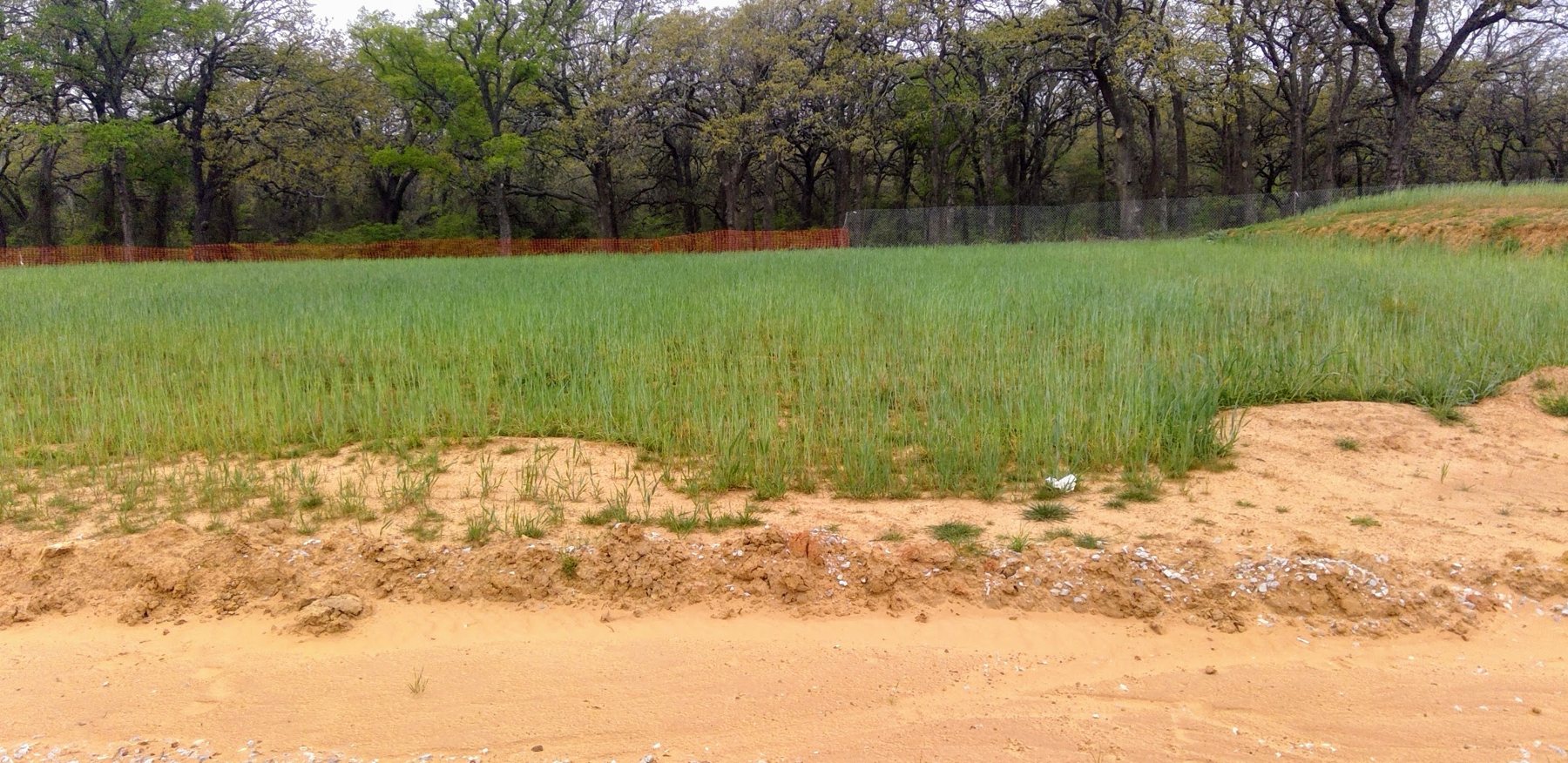
Seed is the cheapest square-foot of stabilization on the site — and the slowest, which is why what happens between seeding and establishment decides whether it was cheap or done twice. Terradyne runs broadcast seeding across Dallas–Fort Worth and Texas, from winter cover crops that hold a pad through the off-season to native mixes that carry a pond slope to permanent cover.
What does broadcast seeding cover?
Broadcast seeding is dry seed spread and raked into prepared ground — no slurry, no rig, just the mix the area needs. Terradyne provides broadcast dry seeding for temporary and permanent vegetative stabilization. Seeding establishes perennial vegetative cover, which helps control soil erosion on disturbed areas.
Native mixes built for North Texas
The mix is the difference between grass that survives a Texas August and grass that has to be bought again. Terradyne's Tank Dam native seed mixes combine common bermuda and Texas natives with summer millet or winter rye, for permanent cover, pond slopes, and final stabilization. The bermuda is the permanent backbone, the natives bring root depth that outlasts the establishment water, and the seasonal companion — millet in the heat, rye in the cold — puts fast cover on the ground while the permanent stand fills in underneath. Pond slopes are where the mix design earns its name: a detention slope lives wet-dry-wet through the seasons, and a stand built only from turf grass gives up the waterline long before a native root mass does.
Seed is a start, not a finish
The honest thing about seed is that it protects nothing on day one. Seeding does not immediately stabilize soils, so construction staff should use temporary erosion and sediment controls during establishment. On slopes, pair seed with an erosion control blanket so the first storm does not carry the seedbed to the fence line. The perimeter controls stay up, the blanket holds the face, and the seed does its slow work underneath — that is the sequence that gets a stand instead of a rill field. Skipping the protection to save its line item is the classic false economy: the storm that takes the seedbed also takes the schedule.
The permit finish line
Seeding is also the compliance play, on both ends of the schedule. TXR150000 requires erosion control and stabilization measures to be initiated immediately in areas where construction activities have temporarily ceased and will not resume for more than 14 calendar days. A cover-crop pass is how an idle phase meets that clock. And the end state is measured in grass. Final stabilization under TXR150000 requires uniform perennial vegetative cover of at least 70% of native background density, or equivalent permanent stabilization measures. The stand the mix grows is the number the closeout inspection reads.
How a stand actually establishes
A seeded area does not green up the way a rendering suggests — it comes in as a sequence. The seasonal companion is up first and fast, putting workable cover on the ground within weeks while the permanent species are still waking up underneath. That first flush is doing a real job: its roots knit the surface, its blades break raindrop impact, and its shade holds the moisture the slower natives need. Over the following seasons the bermuda and the natives fill in as the nurse crop cycles out, and the stand the closeout inspection measures is the permanent one — not the flush that impressed everyone the first month.
What kills new seed
The failure list is short and predictable. Wash takes the seedbed before germination — one hard storm on an unprotected slope moves the seed to the toe and the money with it. Drought takes the seedlings after germination, when a dry stretch catches a stand too young to reach deep moisture. Traffic takes whatever survived — one delivery truck cutting across a tender area undoes a month of establishment in two ruts. And the quiet killer is timing: seed thrown outside its season germinates into conditions it cannot survive, which is why the mix and the calendar get decided together. Every one of these is cheaper to prevent than to reseed — protect the slope, plan the water, fence the traffic, and put the right mix down in its window.
Frequently Asked Questions
What seed mix works in North Texas?
A permanent backbone of common bermuda with Texas natives for root depth, plus a seasonal companion — millet through the summer, rye through the winter — for fast first cover. That is the structure of the Tank Dam mixes, and it matches how a stand actually establishes here.
Does seeding alone stabilize a site?
Not immediately. Seed protects nothing until it grows, so the temporary controls — blankets on slopes, perimeter barriers below — carry the ground through establishment. Once the stand reaches the required density, the temporary layer comes off.
When is broadcast seeding the wrong call?
Channels, steep faces, and anywhere the schedule cannot wait for germination. Concentrated flow strips a seedbed, and instant deadlines call for sod — seed wins on open ground with time to grow.
Broadcast seeding or hydromulch?
Both put seed down; the difference is the protection that lands with it. Hydromulch wraps the seed in sprayed fiber and tackifier for big open areas, while broadcast seed pairs with a blanket where a mat needs to be anchored to a slope.
Request a bid
Send your landscape and stabilization plan to bids@terradynegroup.com or call (214) 878-7392 for broadcast seeding across Dallas-Fort Worth and Texas. Tell us the areas, the season, and the finish you need — temporary cover or permanent stand — and we will match the mix to it. Spray application lives under Hydromulching, instant cover under Sod Installation, slope protection under Erosion Control Blankets, and the whole family under Stabilization & Revegetation.