
Sediment Logs & Wattles
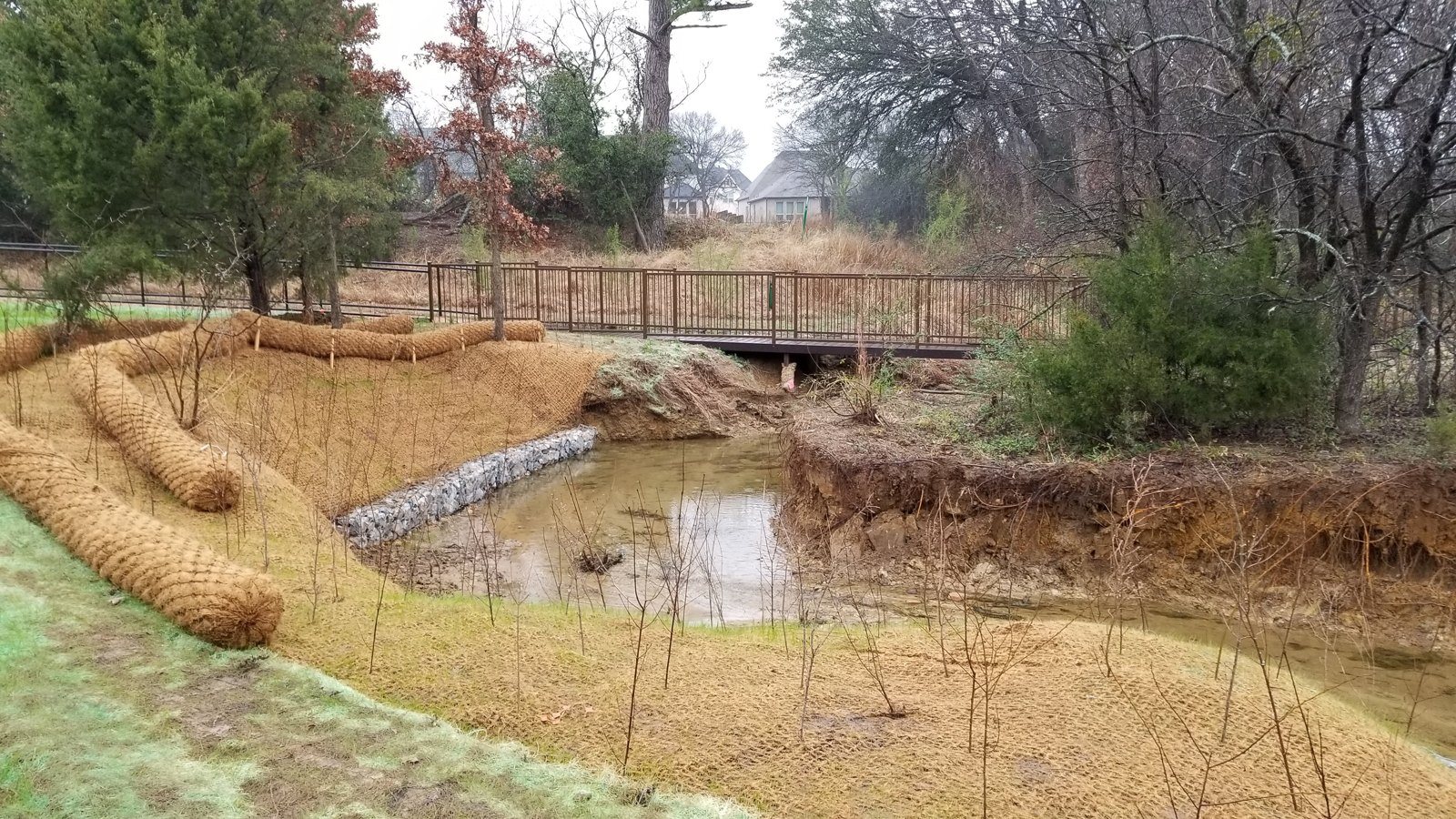
Not every drainage path on a site earns rock, and not every slope can take a trench. For the long middle ground — contours, perimeters, curb lines, the toe of a slope — the working tool is a filled tube laid on the ground and anchored where it sits. Terradyne installs sediment logs across Dallas–Fort Worth in the fills and diameters the job actually calls for.
What is a sediment log?
A sediment log is a barrier you can carry: a filled tube that slows runoff and drops sediment wherever it is laid. Terradyne installs sediment logs as tubular barriers — mesh sleeves filled with straw, excelsior, or composted mulch — laid on contour or at perimeters and staked with wood stakes, or weighted with sandbags where staking is impossible.
One tube, many names
Wattles, fiber rolls, silt socks, sedi logs — the field has a dozen names for the same tube; what matters is the fill, the diameter, and how it is anchored. EPA describes fiber rolls — also called fiber logs or straw wattles — as tube-shaped erosion control devices filled with straw, flax, rice, coconut fiber material, or composted material. If your plan sheet says compost sock or sediment barrier, you are still reading about the same control.
Where logs work — and where they don't
Per EPA, fiber rolls reduce the erosive potential of stormwater on long or steep slopes by helping to slow, filter, and spread overland flows. The same guidance draws the boundary: EPA cautions that construction staff should not use fiber rolls in channels, particularly channels experiencing erosion from concentrated flows. Concentrated flow is rock's job — see Rock Filter Dams for the ditches. The sheet-flow role is written into the state spec as well. On TxDOT projects, biodegradable erosion control logs are installed near the downstream perimeter of a disturbed area to intercept sediment from sheet flow.
Fills and sizes
The tube is a sleeve; the fill is the spec. TxDOT's Item 506 allows log cores of compost, mulch, aspen excelsior wood fibers, chipped site vegetation, agricultural rice or wheat straw, coconut fiber, or other recyclable fibers. Terradyne stocks straw logs in 9-, 12-, and 20-inch diameters, plus excelsior and mulch-filled logs. Fill and diameter get matched to the flow and the surface — a curb line and a slope toe rarely take the same log. Straw is the workhorse where cost drives the bid, excelsior holds its shape longer where the log will sit through more than a season, and the mulch-filled socks bring the densest filtering where the plan or the city asks for it.
Straw logs
The workhorse of the line — stocked in 9-, 12-, and 20-inch diameters, staked on soil or sandbagged on pavement, and priced to run long perimeters without argument.
Coir logs
Terradyne also installs coir (coconut-fiber) logs where the spec calls for a longer-lasting natural fill. Coconut fiber sits between straw and mulch on service life — a natural fill that holds its body through more seasons than straw gives.
Rock socks
Rock socks — rock-filled logs for curb lines and paved surfaces where a weighted barrier is needed — round out the lineup. Where stakes cannot go and sandbags clutter the line, the weight is the anchor.
Mulch & compost socks
The mulch-filled socks bring the densest filtering in the lineup — the pick where the plan or the city calls for compost filter socks by name, and the fill most at home degrading in place at final grade.
Anchoring: stakes or sandbags
An unanchored log is not a control. TxDOT requires the logs secured in a method adequate to prevent displacement from normal rain events and damage to the logs, such that flow is not allowed under them. On pavement where stakes cannot go, sandbag the log — an unanchored log is a barrier that walks. Flow under the log is the quiet failure: the tube looks fine from the truck while the water tunnels underneath it. For the trenched-in perimeter itself, see Silt Fence Installation, and browse the full Erosion Control division for the rest of the plan sheet.
Logs on the maintenance cycle
A log line is easy to install and easy to forget, and forgetting is how it fails. The inspection walk looks for three things. Displacement first: a log that has rolled, drifted, or been driven over is no longer where the water expects it. Undercutting second: a clean tunnel of bare soil beneath the tube means flow found the gap and the log is filtering nothing — that is a re-seat, not a shrug. Fill condition third: straw and excelsior are meant to break down over a season, and a log gone soft and flat has given all it has. Sediment builds against the uphill side by design; when it approaches the top of the tube, the log is full and either gets cleaned out or replaced.
The lifecycle is also the point. Degradable fills can stay in place at final grade on many jobs, breaking down into the soil while the grass comes in, which saves a removal trip the heavier controls always require. Where the plan calls for removal, the light weight cuts the demob to a truck bed instead of a loader. Matching the fill to the job's end state — degrade in place versus pull and haul — is a decision worth making at bid time, not closeout.
Frequently Asked Questions
Are fiber rolls, wattles, and sediment logs the same thing?
Yes. The names come from different spec books and different regions — fiber roll in national guidance, wattle and sedi log in the field, silt sock and compost sock for the mulch-filled versions. What actually differs is the fill material, the diameter, and the anchoring.
Can wattles go in a ditch?
No. Logs are built for sheet flow and shallow contour work; concentrated flow in a ditch or channel undercuts and floats them. National guidance says to keep fiber rolls out of channels — that is what rock check structures are for.
What is inside a sediment log?
Straw, excelsior wood fiber, coir, or composted mulch inside a mesh sleeve — plus rock-filled socks where the line needs weight — with other recyclable fills allowed by spec. The fill changes how the log filters, how heavy it sits, and how long it lasts in the weather.
How are sediment logs held in place?
Wood stakes on soil; sandbag weights on pavement and rock where staking is impossible. Whichever method, the standard is the same — no movement in a normal storm, and no flow allowed underneath the log.
Request a bid
Send your plans to bids@terradynegroup.com or call (214) 878-7392 for sediment log and wattle installation. Tell us the lengths and the surfaces they run across, and we will spec the fill, the diameter, and the anchoring in one pass.