
Stabilization & Revegetation
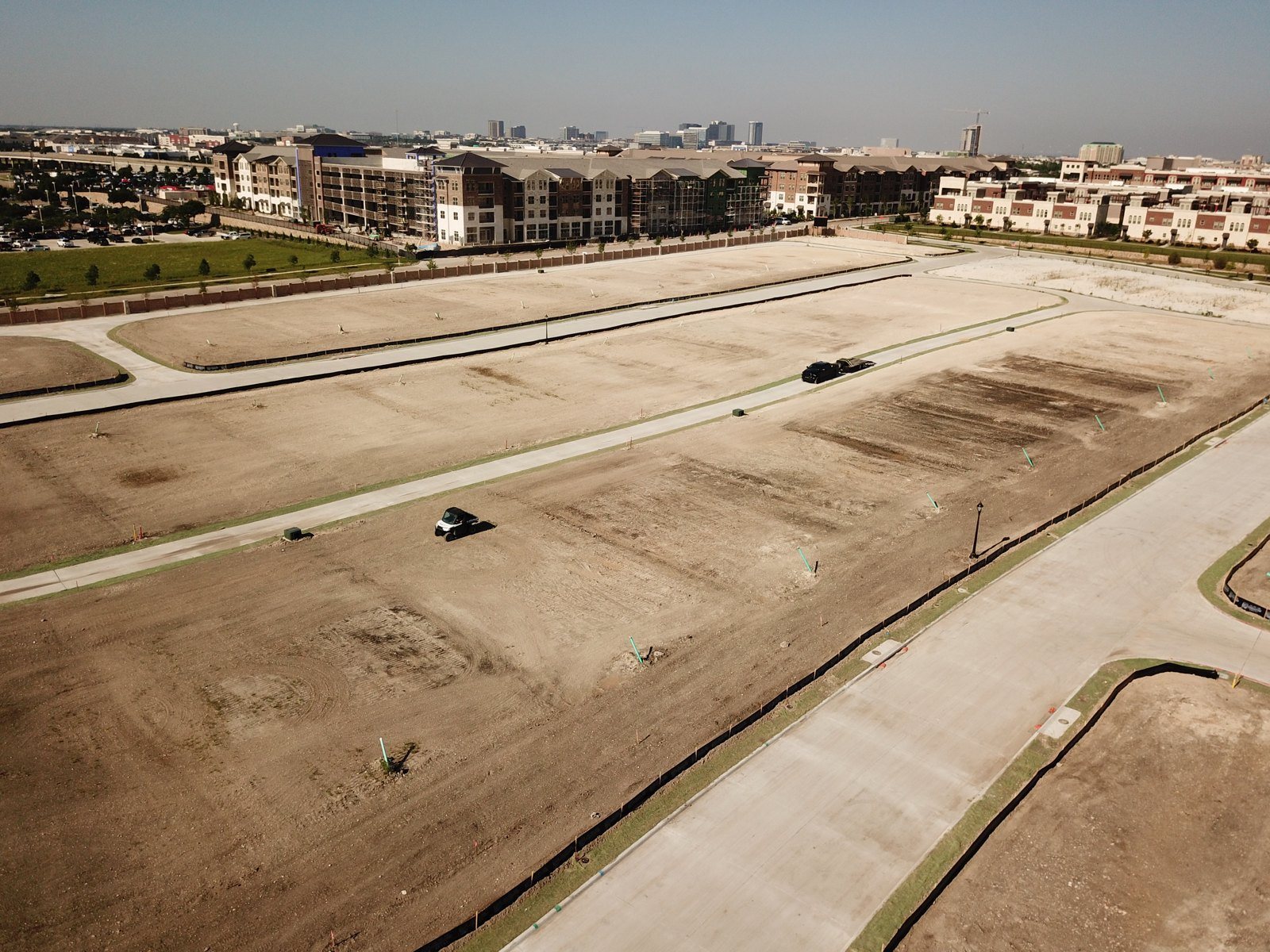
Every erosion-control program is building toward one thing: ground that holds itself. Silt fence, inlet protection, and rock checks buy time, but they are temporary by design — the site is not finished until the bare dirt is covered by something permanent. Stabilization is that finish, and on a Dallas–Fort Worth site it is usually vegetation, established and reinforced until it can carry the slope on its own. Terradyne handles the whole path to cover, from the first pass of seed to the mat that lines a channel for good.
What is site stabilization?
Site stabilization is the work of turning exposed soil into permanent, self-holding cover. Stabilization is how a site closes out its erosion-control obligations: temporary cover holds bare ground whenever work pauses, and permanent cover carries it across the finish line. The permit sets the target. Final stabilization under TXR150000 requires uniform perennial vegetative cover of at least 70% of native background density, or equivalent permanent stabilization measures.
The clock you are working against
Bare ground does not get to wait for the end of the job. TXR150000 requires erosion control and stabilization measures to be initiated immediately in areas where construction activities have temporarily ceased and will not resume for more than 14 calendar days. That is why the smart move is to stabilize in stages, closing out each finished area as the work moves on rather than saving it all for the finish.
Choosing the method
The right method depends on where the ground is: seeding and hydromulch to establish vegetation on open ground, erosion control blankets to hold seed on graded slopes, and turf reinforcement mats where flow concentrates in a channel. Match the method to the surface: Hydromulching, Seeding, and Sod Installation establish the cover; Erosion Control Blankets hold seed on a slope while it grows in; and Turf Reinforcement Mats (TRM) line the channels that never stop flowing.
Planned from the first grading pass
Until that permanent cover is established, the temporary controls carry the load — which is why stabilization is planned from the first grading pass, not saved for the end. A stabilization plan that rides along with the grading is the difference between closing a site out on schedule and chasing bare slopes through every storm. It ties directly back to the rest of the Erosion Control program that holds the site until the grass wins.
Frequently Asked Questions
When does a site have to be stabilized?
Stabilization measures have to start as soon as an area is done being worked and will sit idle rather than at the very end of the job. Closing out finished areas in stages keeps the site compliant and keeps bare slopes from washing while the rest of the work continues.
What counts as final stabilization?
A uniform, established perennial vegetative cover across the disturbed area, or an equivalent permanent measure where vegetation is not the answer. In practice that means the grass — or the mat-and-grass lining — has grown in densely enough to hold the soil on its own.
Request a bid
Send your site and grading plan to bids@terradynegroup.com or call (214) 878-7392 for seeding, hydromulch, blankets, and turf reinforcement mats across Dallas–Fort Worth. Tell us what stage the dirt is at, and we will match the method to the surface and the schedule.