
Tree & Site Protection
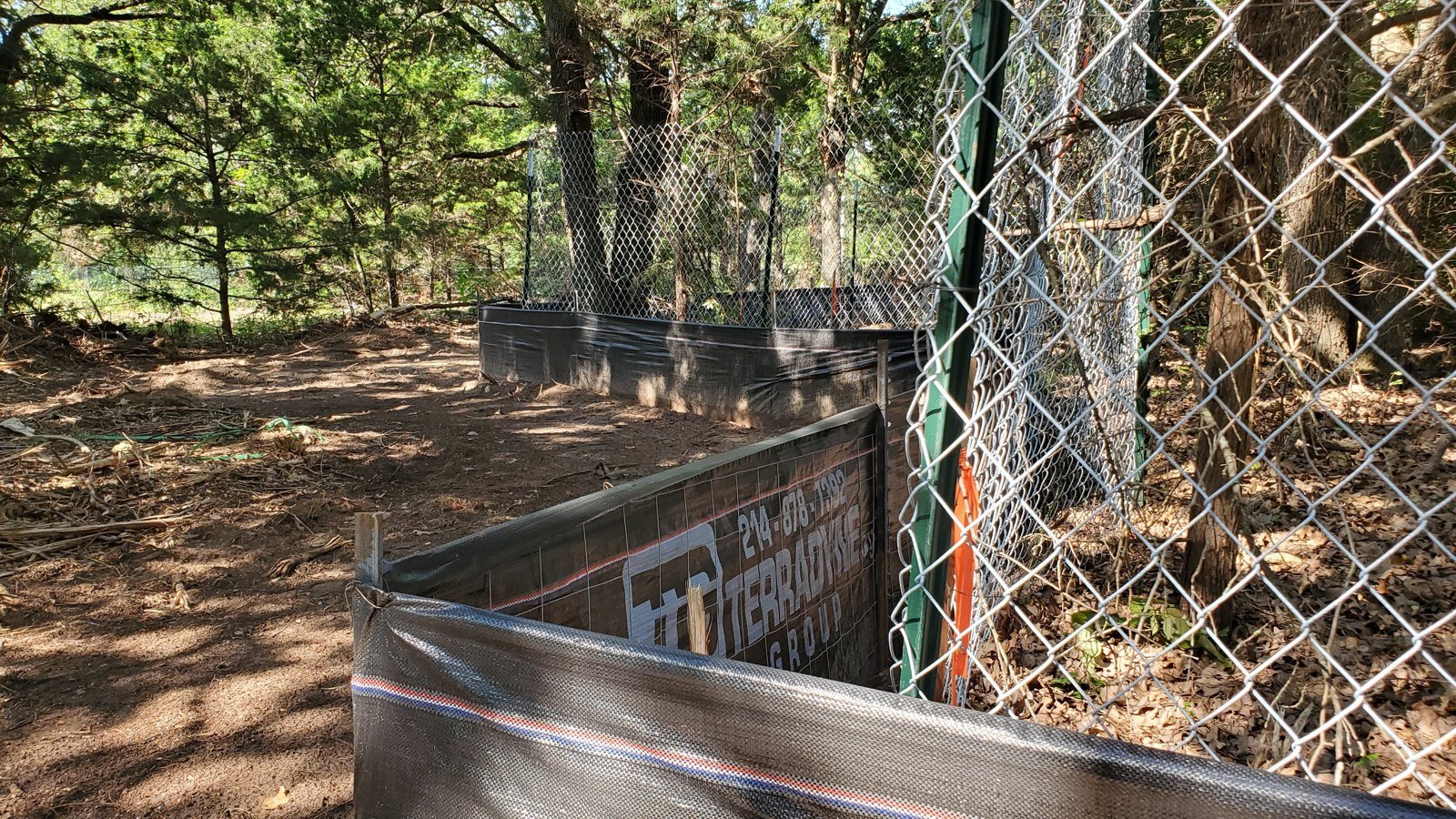
Trees are the one site feature that cannot be re-installed — a root zone crushed in week one shows up as a dead canopy a year after the ribbon cutting. Tree and site protection is the quiet branch of the erosion-control program: fencing that draws the line around what stays, put up before anything that could cross it arrives. The cost asymmetry is brutal — the fence is one of the cheapest line items on the site, and the tree behind it is the only thing on the plan that cannot be bought back.
What is tree and site protection?
It is the physical boundary between construction and the things construction must not touch. Terradyne installs drip-line fencing and trunk protection that keep equipment and stockpiles out of the critical root zone. The fence at the drip line protects the roots nobody can see; the trunk armor takes the hits nobody plans.
Before the first machine
Protection only works if it precedes the threat, and the paperwork agrees. A stormwater pollution prevention plan (SWP3) must be prepared and implemented before construction activities begin. When a city writes tree preservation into the permit set, the same inspectors who walk the erosion controls check the tree fence too — protection goes up before the first machine tracks in. A tree fence installed after grading is documentation of the damage, not prevention of it.
Coordination is the service
The work around a preserved-status tree is coordination work: Terradyne works the effort end to end with the developer, the city, the project engineers, and the arborists — finding the trees the plan protects, clearing a working lane around them, standing up the protection, and documenting the timeline as the site moves. We do not tag or survey trees — the coordination, the clearing lane, the protection, and the record are the service. Preserved-status trees carry city paper and neighbor attention, and the crews working around them answer to both; the value is that every trade knows where the line is, and the file shows the line held.
The lineup
Tree Protection Fencing covers the drip-line barriers, trunk armor, and root-zone mulch that preservation plans call for, and Safety & Chain-Link Fencing draws the harder lines — site security, safety separation, and the fences that outlast a phase. The clearing side of the lane lives at Tree Protection Clearing & Under-Brushing — the under-brushing and line clearing that open a workable path for the fence at the drip line — and Tree Survey & Identification covers locating and identifying the trees the plan protects. Trunk Protection (Board Protection) takes the direct hits, and root-zone mulch beds and posted signage round out the package on the trees the plan flags as keepers. Both fencing lines ride on the same crews and posts as the Silt Fence Installation work they usually mobilize with, and the full program lives under Erosion Control.
Frequently Asked Questions
When does tree protection go up?
Before the first machine tracks in. The barrier has to precede the threat — a fence installed after grading has already lost the roots it was supposed to protect, even if the trunk looks untouched.
What is a critical root zone?
The soil disc under the canopy where the tree's working roots live, usually drawn at the drip line. Compacting it with equipment or burying it under a stockpile injures the tree in ways that show up seasons later.
Who enforces tree protection on a construction site?
Usually the same municipal inspectors who walk the erosion controls — tree preservation is written into the permit set in most cities, and the fence line is checked like any other control.
Request a bid
Send your tree survey or landscape plan to bids@terradynegroup.com or call (214) 878-7392 for tree and site protection across Dallas-Fort Worth. Tell us the tree count and the fence lines on the plan, and the barriers go up before the dirt work starts.