
Storm Drain Inlet Protection
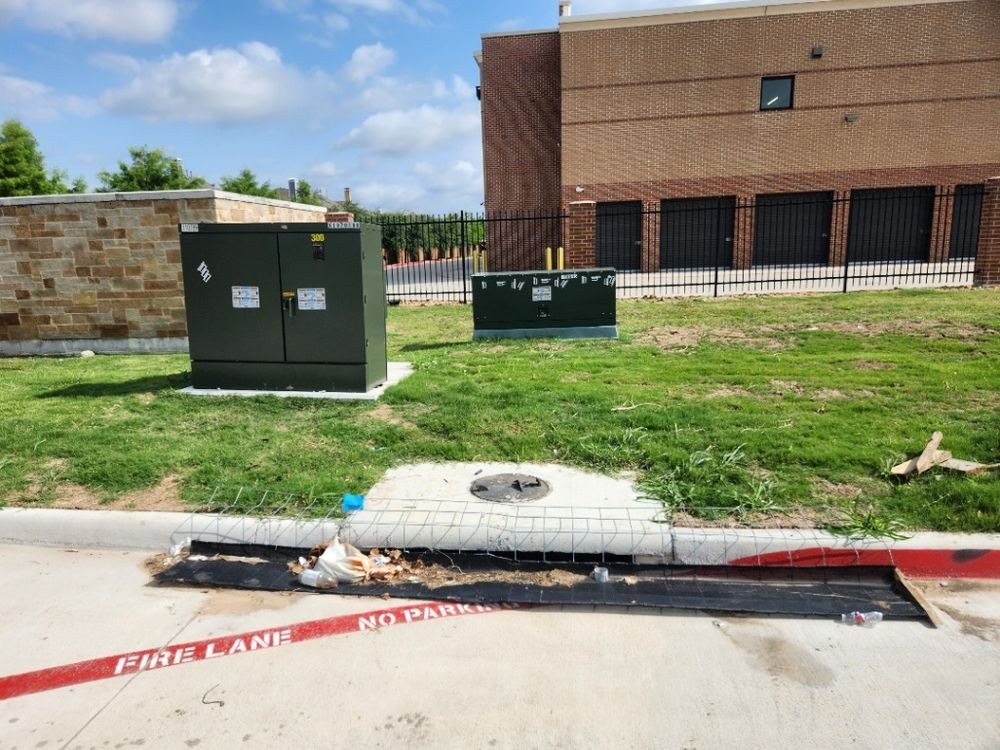
Every storm drain on and around a construction site is a direct pipe to the creek. Whatever the perimeter controls miss, the inlet is the last chance to catch — and the first place a reviewer looks when a street has been carrying mud. Terradyne installs and maintains storm drain inlet protection across Dallas–Fort Worth, matched to the inlet, the street, and the detail your city actually enforces.
What is storm drain inlet protection?
Storm drain protection is the filter between an active site and the public storm system. Terradyne installs inlet protection as temporary sediment control devices that filter or pond runoff at storm-drain inlets — the last line of defense before sediment enters the MS4.
Matching the control to the inlet
There is no single inlet filter, because there is no single inlet. Terradyne matches the configuration to the inlet: curb inlet protection from fabric-on-wire units to heavy welded Z-design panels, and drop or grate inlet protection including rock socks, under-grate fabric wraps, and silt sacks. City preferences on inlet protection hardware vary across DFW; confirm the locally approved detail before you order materials. An inlet bag that one city accepts is the same hardware another city writes up — the detail sheet, not the catalog, decides.
The location matters as much as the inlet type. A protected inlet on an active street has to filter runoff without becoming a traffic hazard or damming the gutter; the same inlet inside the fence line can take a bulkier configuration because nobody is driving over it. Low-point inlets collect everything the street carries and need setups that can pond without flooding the intersection; on-grade inlets shed bypass flow to the next inlet down, which only works if that one is protected too. This is why a drainage plan gets protected as a system — one bare inlet in a chain of protected ones is where all the sediment goes.
What the regional details require
The details behind these controls carry real rules, not just drawings. iSWM warns that the hog wire weir configuration decreases the capacity of the inlet and shall only be used when an engineer has determined there is adequate storage or positive overflow. iSWM's curb rock sock detail is intended for on-grade inlets — not low points — and prohibits installation where the rock socks would extend into an active travel lane. The iSWM detail builds curb rock socks from 1 1/2-inch crushed rock enclosed in wire mesh, with a maximum sock diameter of 4 to 6 inches and a minimum of two socks. For area drain inlets, the iSWM filter tube detail completely surrounds the drainage access with erosion control log, with ends overlapped tightly a minimum of 24 inches.
Maintenance: cleanout and removal
Inlet protection fails by filling up, quietly. The notes on iSWM's hog wire weir inlet protection detail require the contractor to inspect the control and remove accumulated silt when its depth reaches 2 inches. That is a shallower trigger than most crews expect, and it is the difference between a filter that keeps passing water and one that turns the gutter into a pond. The end of the control's life is written into the detail too. The iSWM detail requires inlet protection to be removed as soon as the source of sediment is stabilized. A filter left in past stabilization stops being a control and starts being a drainage complaint.
What inlet failure looks like from the street
The failure modes are visible before the violation is written. Water standing at the curb after a storm has passed means the filter is loaded and nothing is getting through. A dirty fan of sediment on the pavement below the inlet means flow is bypassing the control — going over it, under it, or around an end that was never sealed. And a filter sitting in the gutter three feet from its inlet means traffic or flow moved it and nobody walked it back. Each of those is a five-minute fix on the day it appears and a finding the week after. The crews that stay clean treat inlets as a route, not a task: every protected inlet gets eyes on it after every storm, on the same walk that checks the perimeter.
The last line cannot be the only line
Inlet protection is the last line of defense, not the first — pair it with upstream perimeter controls so the inlet filter is not doing the whole site's job. Keep the perimeter tight with Silt Fence Installation, slow the ditches with Rock Filter Dams, and run contour protection with Sediment Logs & Wattles so the inlet filter only sees what everything else missed. The full Erosion Control division covers the rest.
Frequently Asked Questions
When does inlet protection get cleaned out?
When the trapped silt builds to the governing detail's trigger depth, it comes out — and on some configurations that line is only a couple of inches, because a loaded filter starts ponding water into the street. Cleaning on the trigger keeps the control working and the pavement dry.
Do all inlets get the same protection?
No. Curb inlets, drop inlets, and grate inlets each take different hardware, and cities have documented preferences about which configurations they accept. The right answer starts with the inlet type and ends with your jurisdiction's approved detail.
Does inlet protection slow down drainage?
Some configurations do reduce inlet capacity by design — that is why the regional detail requires an engineer to confirm adequate storage or positive overflow before certain setups are used. It is a control to engineer, not improvise.
When does inlet protection come out?
As soon as the sediment source is stabilized. Leaving filters in after the dirt work is done invites ponding and street flooding complaints — removal is part of the scope, not an afterthought.
Request a bid
Send your drainage plan to bids@terradynegroup.com or call (214) 878-7392 for storm drain inlet protection. Tell us the inlet count and types on your plan, and we will match the hardware to the detail your city enforces.