
Safety & Chain-Link Fencing
The orange fence answers a different question than the silt fence below it: not where does the water go, but where do the people and machines stop. Terradyne hangs both lines across Dallas–Fort Worth — the orange one that warns and the galvanized one that refuses — usually in the same mobilization as the sediment controls beside them.
What is construction safety and chain-link fencing?
Site delineation and security, stated plainly. Safety and chain-link fencing is site delineation and security fencing — not a stormwater BMP — and Terradyne estimates and installs it alongside erosion and sediment controls. That honesty matters: this page claims no stormwater function for a safety product.
It is, instead, the fencing scope that rides along with the erosion package — the same crews, the same posts, and the same schedule carry both, which is why the two are estimated together in the first place.
The orange line
Orange safety fence is 4-foot orange vinyl or HDPE mesh on T-posts, marking hazards and limits of disturbance. It is the cheapest instruction a site ever posts: stay out, stop here, hazard behind this line. Open excavations, drop-offs, protected areas, and limits of disturbance all get the same answer. The mesh reads at a distance, survives the weather, and moves fast — a crew hangs long runs in a morning, and the line relocates as phases open and close.
The galvanized line
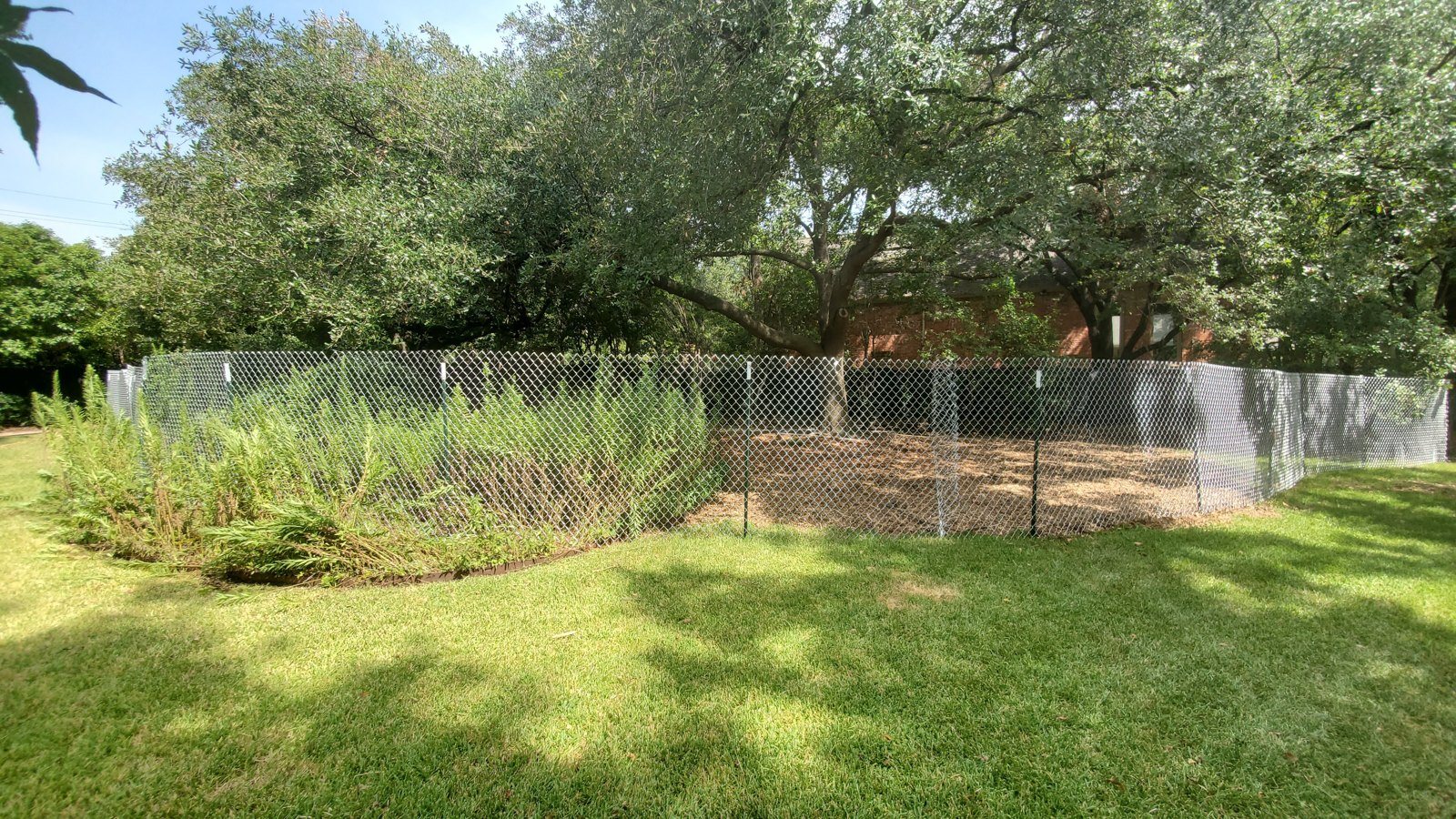
Chain link runs 4-foot or 6-foot galvanized fabric on T-posts, optionally with a privacy screen. Barbed wire and swing gates are part of the same fencing scope. Where the orange fence advises, chain link enforces — laydown yards, equipment storage, project offices, and any boundary the public should not cross after dark. Gates put controlled openings in the secure line; privacy screen adds sightline control where the street or the neighbors matter; barbed wire answers the boundaries that get tested.
Frequently Asked Questions
Is safety fence a stormwater control?
No — and this page says so plainly. Safety and chain-link fencing delineates and secures; the sediment work is done by the silt fence and controls it often stands beside. They share crews and posts, not functions.
When is orange mesh enough, and when chain link?
Orange mesh marks — hazards, limits, keep-outs — and relies on people honoring the line. Chain link secures: laydown, equipment, and boundaries that must hold when nobody is watching. Privacy screen and gates extend the secure option.
Why bundle fencing with erosion control?
Because the perimeter crew is already there. The posts, the trench line, and the mobilization are shared — one visit hangs the sediment fence and the delineation line both.
Request a bid
Send your site plan to bids@terradynegroup.com or call (214) 878-7392 for safety and chain-link fencing across Dallas-Fort Worth. The tree-side barriers live at Tree Protection Fencing, the family hub at Tree & Site Protection, and the posts at Metal T-Posts & Caps.