
Construction Street Sweeping & Track-Out Control
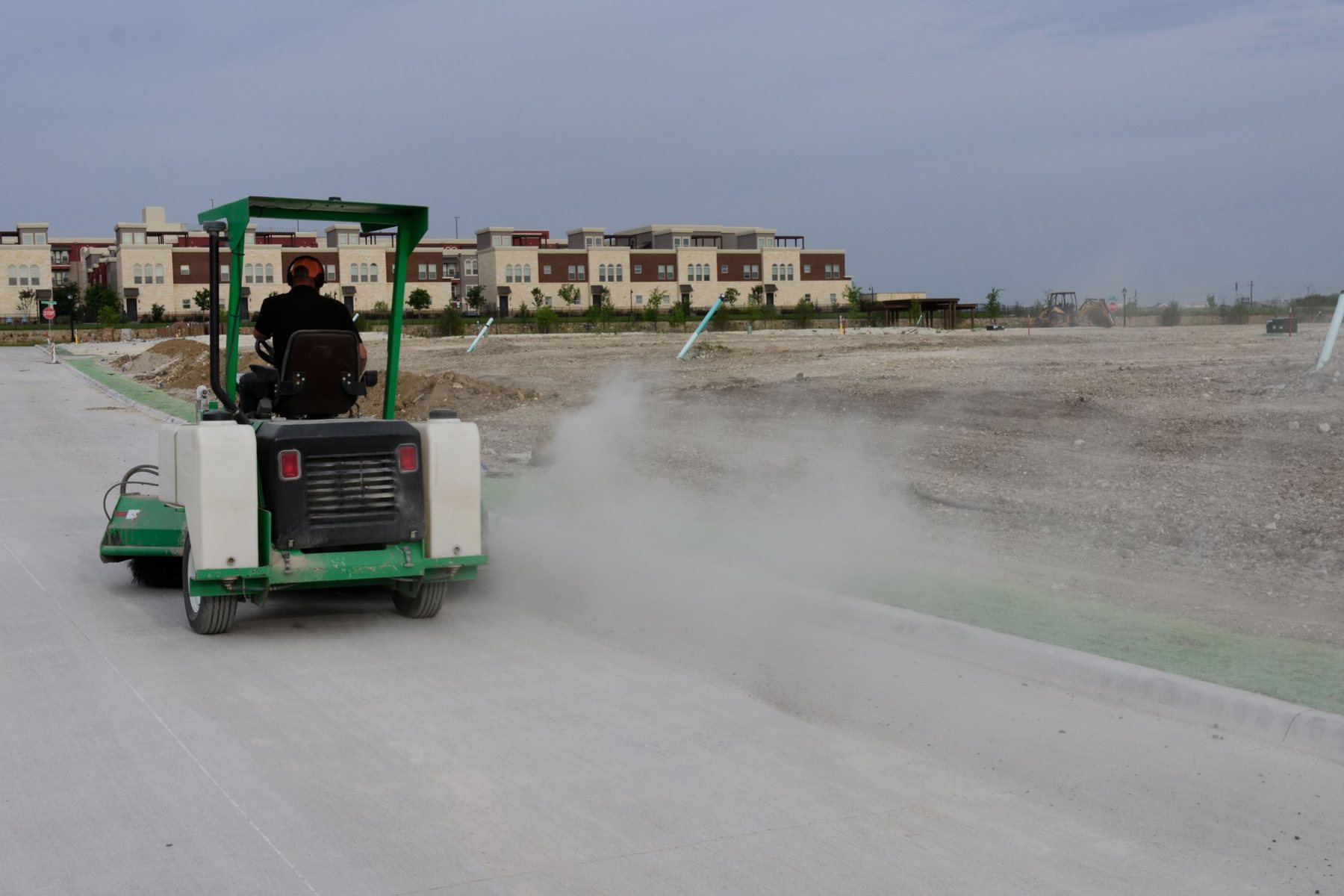
Nothing tells a city inspector a site is out of control faster than a trail of mud running down the public road. Track-out is site housekeeping made visible: the sediment that tires drag off a job and onto the pavement, where anyone driving by can see it and the city can cite it. Terradyne keeps that road clean across the Dallas–Fort Worth metroplex, from the rock at the exit to the sweeper that clears what gets past it. Done consistently, it is the kind of quiet competence that keeps a job off the city's radar instead of on the complaint line.
How do I keep construction track-out off public streets in DFW?
Under TXR150000, permittees must minimize, to the extent practicable, the off-site vehicle tracking of sediments and dust. Terradyne meets that duty with stabilized rock entrances, anti-track panels where traffic is heavy, and a street-sweeping program that clears whatever still escapes onto the pavement.
Why track-out is the problem inspectors see first
A muddy street is a complaint magnet: neighbors call, the city notices, and a project that is otherwise clean picks up a violation for the one thing everyone can see from the road. TXR150000 also requires controls to minimize the off-site transport of litter, construction debris, and construction materials. The road out front is the part of your site the public actually watches, so it is the part that shapes how your project is judged.
Stopping track-out at the exit
The cheapest track-out fix is the one that never lets mud reach the pavement in the first place. The iSWM stabilized construction exit detail requires a minimum length of 50 feet. The iSWM stabilized construction exit must be at least 30 feet wide for sites larger than 5 acres, and at least 20 feet wide for smaller sites. Terradyne controls track-out with stabilized rock construction entrances built with 3- to 5-inch coarse rock over geotextile. A properly sized rock exit shakes the mud off tires before they hit the road, which is why it is the first control we set at any active entrance and the one we check the hardest. Get the exit right and most of the track-out problem disappears before it ever starts, which is far cheaper than sweeping the same stretch of road every afternoon.
When rock is not enough
On a busy site, rock alone fills with mud and quietly stops working. Where rock alone is not enough, Terradyne adds anti-track FOD panels at construction exits. Terradyne redresses (re-rocks) a stabilized entrance once its voids fill with sediment. Keeping the exit effective is ongoing work, not a one-time install, and a pad that has silted up is no better than no pad at all.
Street sweeping: the last line of defense
Even a good exit lets some track-out through, and that is what sweeping is for. Terradyne runs a construction street-sweeping program to clear track-out - sediment carried by tires onto public pavement. Regular sweeping keeps the public road clean between rains, so sediment never gets the chance to wash off the pavement and into a storm drain. On sites near a busy intersection or a finished neighborhood, a scheduled sweep is often the difference between a quiet project and a stack of complaints.
What TxDOT projects require
State road work names its own controls, and track-out is squarely on the list. TxDOT Item 506 includes construction exits and vertical tracking among its erosion and sediment control measures. If your job touches a highway, keeping tracked mud off the traveled way is a spec line, not a courtesy.
Terradyne's track-out and street-sweeping service across Dallas–Fort Worth
Terradyne has kept North Texas sites clean since 1988. We build and maintain the rock entrances, add anti-track panels where the traffic demands them, redress pads when they load up, and run the sweeper when track-out gets past everything else. Track-out onto public streets is one of the most visible and most-cited problems on active construction sites; a clean public road signals a well-run project. Track-out control starts at the exit: a properly built stabilized construction entrance is the first line of defense before sweeping is ever needed. See our Stabilized Construction Entrance work for the install side of track-out control, pair it with Water Truck Services so the road is neither muddy nor dusty, and keep every control working with BMP Maintenance & Repair.
Local rules vary
City rules on street cleanliness and sweeping vary; confirm your jurisdiction's expectations before mobilizing. A clean public road is one of the simplest, most visible ways to show a site is well run, and it is worth building into the schedule rather than scrambling after a complaint. Browse the full Maintenance division for everything that keeps a site presentable and compliant between inspections.
Frequently Asked Questions
What is track-out?
Track-out is the mud and sediment that vehicle tires carry from a construction site onto public streets. It is the most common, and most visible, reason a site draws a neighbor complaint or a violation.
How do you prevent track-out?
The first line of defense is a stabilized rock exit that shakes mud off tires before they reach the road. Where traffic is heavy, anti-track panels help, and a street-sweeping program clears whatever still gets through.
Do I still need street sweeping if I have a rock entrance?
Often, yes. Even a well-built exit lets some track-out through under heavy traffic, and rock pads silt up over time. Sweeping is what keeps the public road clean between the fixes.
Is track-out really a compliance issue?
Yes. Keeping sediment from leaving the site, including on tires, is a permit requirement, and a muddy public road is the fastest way to earn a city inspector's attention.
Request a bid
Tired of chasing mud off the road? Email bids@terradynegroup.com or call (214) 878-7392 to request a bid for construction street sweeping and track-out control on your Dallas–Fort Worth project.