
McKinney, TX SWPPP & Stormwater Requirements
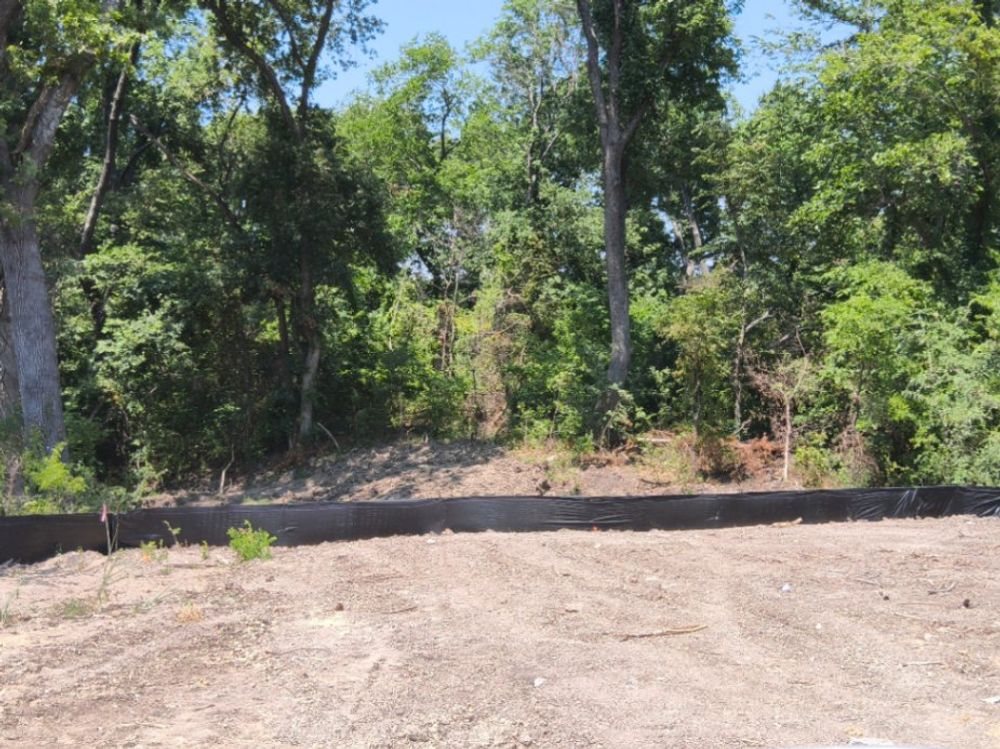
Updated July 2026
McKinney regulates the shovel, not the acre — every soil-disturbing activity needs the city's paperwork, and the city looks at the controls before the work starts. a permit that starts at the first disturbance, a city inspection that comes before the work, and a rulebook that names the regional standard by name.
What does McKinney require for SWPPP compliance?
The city draws its line at the first shovel, not the first acre. Within the City of McKinney, all soil disturbing activities require a grading permit. The state paperwork rides along with it — and the city checks the controls on the ground before the dirt moves.
For scale, the state's own program starts an order of magnitude later. TXR150000 defines small construction activity to include clearing, grading, and excavating that disturb at least one acre and less than five acres. McKinney's trigger does not wait for that math.
The paperwork comes before the permit
McKinney sequences the documents deliberately. A copy of the appropriate construction site notice (CSN) or notice of intent (NOI) must be provided to the City of McKinney prior to issuance of a grading permit, and the site-specific erosion control plan (ECP) must be provided to McKinney's Stormwater Administrator prior to grading. That ordering matters on a schedule: the notice and the erosion control plan are not closeout paperwork, they are the keys that open the site.
The city looks before you dig
Where the region's baseline relies on the operator's own record, McKinney puts its own eyes on the site first. No soil-disturbing activities may occur in McKinney before the SW3P, the erosion control plan, and the associated best management practices are fully implemented — and then inspected by McKinney's Erosion Control Inspectors. Once work is running, the housekeeping expectation stays daily. McKinney's construction stormwater program calls for erosion and sediment control measures to be checked and maintained daily — before leaving the site and before rain.
The rulebook stack
McKinney's general notes name every layer of the stack a site answers to. McKinney's general notes require the contractor to comply with the City of McKinney's Stormwater Ordinance, the current NCTCOG iSWM Technical Manual for Construction, and the TPDES general construction permit TXR150000. For a crew, that means the city's inspectors, the regional standard's details, and the state permit's schedules are all in play on the same fence line — built once, to the strictest of the three.
The weekly rhythm — and the state floor under it
In McKinney, the site must be reviewed by the contractor or the contractor's representative weekly and after any major storm, with adjustments and repairs to the erosion control measures made as needed. The state's own inspection clock keeps running underneath. TXR150000's standard schedule requires construction site inspections at least once every 14 calendar days and within 24 hours of the end of a storm event of 0.5 inches or greater. Two rhythms, one record: the site file has to show both.
Trees are part of the dirt work here
Prior to construction in McKinney, the contractor must construct and maintain a protective fence at the drip line of all protected existing trees unless noted otherwise on the construction drawings — with placement of the tree preservation fencing approved by the City Urban Forester before site work begins. Plan the protective fencing with the erosion control, not after it — the barriers and the sediment controls go in on the same mobilization. The fence itself lives at Tree Protection Fencing.
Closeout is a standard, not a formality
Unless otherwise approved by the Director of Engineering, McKinney requires perennial vegetation to be fully established in all disturbed areas and all temporary erosion and sediment control measures removed prior to final acceptance and issuance of a certificate of occupancy. Budget the revegetation like a scope item, because in McKinney it is one — the certificate at the end of the job runs through established grass.
Inspections and the record
The operator owns the inspection record from first disturbance to final stabilization. Terradyne provides routine SWPPP inspection reports with cloud-based client access. See SWPPP Inspections for how the program works, and Silt Fence Installation for the perimeter the city's inspectors will look at first.
Check before you mobilize
Ordinances and city standards get revised; confirm the current documents with the city before you mobilize. For other North Texas cities, start at Local Compliance.
Frequently Asked Questions
When does a McKinney project need a grading permit?
At the first soil disturbance — McKinney does not wait for the state permit's acre lines. If ground is being opened inside the city, plan on the grading permit and the paperwork that unlocks it.
What has to happen before work starts in McKinney?
In order: the site notice or state filing goes to the city, the erosion control plan goes to the Stormwater Administrator, and the controls go in the ground — where the city's own inspectors look at them before soil moves. On treed sites, the protective fencing is part of that pre-work picture too.
How often does a McKinney site get reviewed?
On two clocks at once. The city's general notes put the contractor on a weekly walk plus a check after any major storm, and the state permit's inspection schedule runs underneath for the life of the project.
What does McKinney expect at closeout?
Established perennial vegetation across the disturbed areas and the temporary controls removed — before final acceptance. Treat revegetation as a line item with schedule risk, not an afterthought.
Request a bid
Send your McKinney project's plans to bids@terradynegroup.com or call (214) 878-7392 for SWPPP and erosion control support. Tell us the acreage and the schedule, and we will bring the plan, the controls, and the inspection cadence the city expects.