
Grand Prairie, TX SWPPP & Stormwater Requirements
Updated August 2026
Grand Prairie reads your SWPPP before you break ground — the fully executed SWP3 goes to the city Stormwater Department for review and acceptance, city staff inspect BMPs before any earth disturbance, and the submittal carries no city fee.
What does Grand Prairie require for SWPPP compliance?
In Grand Prairie, the owner/operator is responsible for preparing the Stormwater Pollution Prevention Plan prior to any earth disturbing activities, and the fully executed SWP3 must be submitted electronically to the city's Stormwater Department for review and acceptance, prepared in accordance with the TPDES Construction General Permit and the City of Grand Prairie ordinances.
What the city reads before you dig
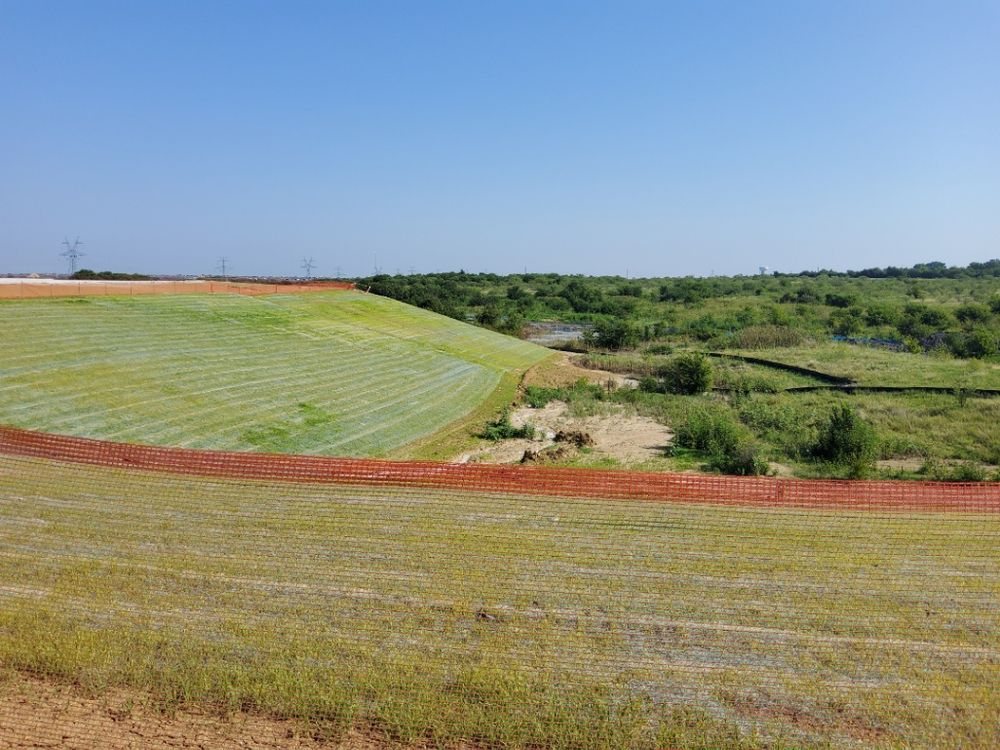
Grand Prairie's SWP3 must include at a minimum the Erosion Control Plan and Landscaping Plans as well as all TPDES Construction General Permit requirements, the city's Stormwater Department or designee inspects Best Management Practices prior to any earth disturbing activities, and there is no city fee for the SWP3.
The plan set and the pollution-prevention plan arrive together — one submittal, reviewed as one package.
Signatures and size tiers
Grand Prairie requires the SWP3 to be fully executed — signed by both the project owner and the operator (contractor) with signatures authorized in accordance with 30 TAC Subchapters 305.44 and 305.128 — with a signed Small Construction Site Notice from the owner and operator included for land disturbances of one acre and less than five acres, and a Notice of Intent plus Construction Site Notice provided by the primary operator for disturbances of five acres or more or those included in a larger common plan of development equaling five or more acres.
Both signatures, every time — an unsigned plan is an incomplete submittal, not a formality.
The erosion control plan is engineered
In Grand Prairie, an erosion control plan titled 'Erosion Control Plan' must be prepared for all projects, and except for single-lot single-family residential development, the erosion control plan for all commercial and residential developments must be sealed by a professional engineer licensed to practice in Texas with competency in drainage design. Grand Prairie's development plan review standards require the erosion control plan to be site specific, meet the Construction General Permit requirements, and be prepared by a qualified professional prior to preparation of the NOI and the start of construction — with a sedimentation basin with location and design construction details when the total disturbed area is 10 acres or greater, and wattles for erosion control allowed only by written permission of the City Engineer.
Site-specific and sealed: the reviewers expect a plan drawn for this site, not a standard detail sheet.
Trees on the plan
Grand Prairie's tree protection standards focus on mature trees eight caliper inches and larger of desirable species defined as Protected Trees, require four-foot plastic fencing, silt fencing, or another method approved by the Tree Preservation Administrator installed around the drip line of all protected trees prior to commencement of construction, and prohibit construction activity, fill, excavation, material storage, equipment cleaning, or waste disposal under the canopy or within the drip line of any protected tree unless expressly authorized in writing by the Tree Preservation Administrator.
The caliper threshold decides what has to be shown, fenced, and left alone.
The program behind the review
The City of Grand Prairie MS4 holds TCEQ authorization TXR040065 with authorization status ACTIVE and authorization type MS4 Level 4, with coverage dating from December 10, 2008 and bacteria listed as a pollutant with a TMDL.
An active state authorization is what puts city staff on your site.
The state permit still applies
The city's rules sit on top of the state's, not in place of them. A stormwater pollution prevention plan (SWP3) must be prepared and implemented before construction activities begin. TXR150000's standard schedule requires construction site inspections at least once every 14 calendar days and within 24 hours of the end of a storm event of 0.5 inches or greater.
The city's review and the state program run together for the life of the disturbance.
Inspections and the record
The operator owns the inspection record from first disturbance to final stabilization. Terradyne provides routine SWPPP inspection reports with cloud-based client access. See SWPPP Inspections for how the program works, and Silt Fence Installation for the perimeter the reviewers will look at first.
Check before you mobilize
Ordinances and city standards get revised; confirm the current documents with the city before you mobilize. For other North Texas cities, start at Local Compliance.
Frequently Asked Questions
Who writes the SWP3 in Grand Prairie?
The owner or operator is responsible for preparing it, and it goes to the city's stormwater staff for review and acceptance before construction.
What has to be in the Grand Prairie submittal?
At minimum the erosion control plan and the landscaping plans, with the plan itself signed by the parties the city requires.
Does the state permit still apply inside Grand Prairie?
Yes — the city's review is the local layer, and the state program's obligations run from the first disturbance to final stabilization.
Request a bid
Send your Grand Prairie project's plans to bids@terradynegroup.com or call (214) 878-7392 for SWPPP and erosion control support. Tell us the acreage and the schedule, and we will bring the plan, the controls, and the inspection cadence the city expects.