
Concrete Washout Facilities
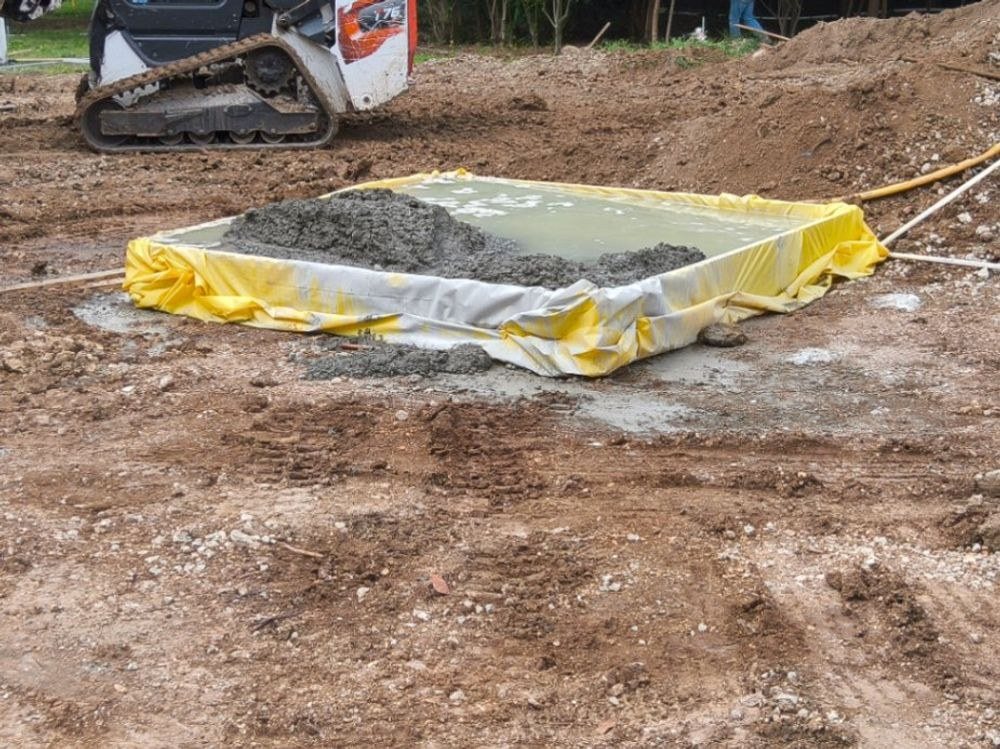
*Updated July 2026*
When a ready-mix truck rinses its chute or a pump crew flushes a hopper, the leftover slurry is one of the most caustic, most mobile pollutants on a construction site: highly alkaline, loaded with fine cement solids, and happy to run straight into the nearest storm drain if nothing is there to catch it. Left on bare ground it burns vegetation, spikes the pH of whatever water it reaches, and can harm fish and aquatic life well downstream of the pour. A concrete washout is the control that catches it, and on a regulated site it is not optional.
This guide covers what the rules require in Texas, how to build and operate a washout that actually holds, and the handful of mistakes that turn a five-minute control into a documented violation. It reflects the requirements in force as of the date above; permit cycles and local rules change, so treat it as a working reference and confirm the specifics for your jurisdiction.
Do I need a concrete washout on my site?
Under TXR150000, discharging concrete truck washout water to surface water in the state, including to storm sewers, is prohibited. If concrete is placed or pumped on a regulated site, you need a contained place for crews to rinse chutes so slurry never reaches a ditch, drain, or waterway. Terradyne builds and services compliant washouts across Dallas–Fort Worth.
What Texas rules require
Texas handles concrete washout through its construction general permit, and the language leaves little room for interpretation. TXR150000 requires concrete truck washout water to be disposed where structural controls, such as temporary berms, shallow pits, or storage tanks, prevent discharge to surface water. Under TXR150000, washout of concrete trucks during rainfall must be minimized, and discharge of washout water is prohibited at all times. TXR150000 requires that concrete truck washout disposal not cause or contribute to groundwater contamination. Where a SWP3 is required, TXR150000 requires concrete washout areas to be shown on the site map. In plain terms: contain the washwater, keep it out of the storm system and out of the groundwater, never let it run off in the rain, and show the washout on your site map. Those four ideas are the whole compliance test, and a washout that meets them will survive an inspection.
The reason the permit is so blunt about it is that concrete washwater is deceptively dangerous. It looks like dirty water, but its alkalinity is closer to a drain cleaner than to mud, and it does its damage invisibly, downstream and after the fact. Regulators treat it as a discharge to be prevented outright, not a nuisance to be minimized.
How to build a compliant washout
A washout does not have to be elaborate; it has to contain. The whole job is a watertight basin that holds the slurry until the water is gone and the solids have hardened. EPA guidance is that concrete washout facilities should not be placed within 50 feet of storm drains, open ditches, or waterbodies. Location is half the battle: set the washout where trucks can reach it but where a leak or an overflow cannot find a path to a drain or a ditch.
A lined washout pit can be dug below grade or built above grade, and the plastic lining must be free of tears or holes that would let washwater escape. Where the washout is not within view of the pour location, signage is needed to direct concrete truck drivers to it. There are three common ways to build one. A lined pit is cheapest where there is room to dig, but the liner is the whole control, so it has to go in clean and stay intact. Prefabricated metal or plastic bins are the fastest to deploy and the easiest to swap out on a busy site, and they contain both washwater and solids in one portable unit. A bermed, lined area works where digging is not an option and the ground is reasonably flat. Whichever you choose, the principles are identical: an impervious barrier, enough freeboard to survive a rain, and a clear path for trucks to use it instead of the nearest low spot.
Operating and maintaining the washout
The install is the easy part; the failures happen later, when a full pit overflows in a storm or a torn liner leaks unnoticed for a week. EPA recommends that concrete washout facilities be inspected daily and after heavy rains for leaks, liner damage, and fill level. When a concrete washout is filled to over 75 percent of capacity, EPA guidance is to vacuum off or evaporate the washwater to avoid overflows before removing the hardened solids. A washout that has filled past capacity or lost its liner is no longer a control; it is a discharge point that happens to look like a control. Building a quick daily look and a post-rain check into the site routine is what keeps it working, and it is far cheaper than the cleanup and the notice that follow an overflow.
Timing the cleanout matters too. In the heat of a Texas summer, standing washwater will often evaporate on its own; in a wet stretch it will not, and vacuuming it off before the next storm is the only way to keep the basin from spilling. Either way, once the remaining material hardens it can be broken out and, in most cases, hauled off for recycling rather than sent to a landfill.
Terradyne's concrete washout service across Dallas–Fort Worth
Terradyne has kept North Texas sites out of trouble since 1988, and concrete washout is one of the controls crews most often forget until an inspector asks where it is. Terradyne builds concrete washout containment, roughly 15 by 15 feet, with an impermeable liner. Terradyne cleans out or replaces the washout at 75% full and marks it with signage, using a lined pit or a prefabricated container. We site it correctly, mark it so drivers actually use it, and keep it serviced through the pour schedule so a busy concrete day never turns into a compliance problem. On a phased job we move and refresh the washout as the work moves, instead of leaving one overloaded pit at the far end of the site.
Why sites get cited
A concrete washout is one of the cheapest controls to install and one of the most common to get cited for skipping; plan it into the site before the first pour. A washout is only as good as its upkeep: a pit that has overflowed or torn its liner is a violation waiting to be photographed, so build inspection into the schedule. The most common washout findings are not exotic. They are, in order: no washout on site at all when concrete is being placed; a washout set too close to a storm drain or ditch; and a pit that overflowed because nobody cleaned it out before the rain. Every one of them is cheap to prevent and expensive to explain after a muddy, high-pH stream has already reached the storm system. The pattern is always the same: a control that would have taken twenty minutes and a bin, skipped or neglected until it became the one thing an inspector could photograph from the curb, and by then the fix is not a bin but a cleanup, a report, and a hard conversation with the city.
Related controls and local rules
City and ready-mix-supplier rules on washout disposal and recycling vary; confirm your jurisdiction's expectations and your supplier's take-back options before the pour. A washout rarely works alone. Pair it with Storm Drain Inlet Protection so the nearest drain has a backstop if something gets past the basin, keep the site perimeter tight with Silt Fence Installation, and see Dewatering Services when you need to move clean water off the site without moving pollutants with it. For everything else your site needs to stay compliant, browse the full Erosion Control division.
Frequently Asked Questions
Do I really need a concrete washout for a small pour?
If wet concrete is placed or a truck rinses on site, yes. There is no small-pour exemption that lets slurry reach a drain or ditch. The rule is about where the washwater goes, not how much concrete you pour.
Where on the site should the washout go?
Somewhere trucks can reach easily but well away from anywhere water could carry the slurry off site: not beside a storm drain, an open ditch, or a waterway. Put it where a spill stays put and cannot run to the street.
How often does a washout need to be cleaned out?
Check it daily and after heavy rain, and clear it before it gets too full. A washout that overflows is worse than no washout, because it releases everything it was holding in one shot, usually straight toward a drain.
Can I just wash out into a corner of the dirt?
No. Rinsing onto bare ground lets caustic washwater soak toward groundwater or run off in the next rain. The washwater has to be contained and kept away from both surface water and groundwater, which bare ground does neither.
What happens to the hardened concrete left in the washout?
Once the washwater is gone and the solids have set, they can be broken out and, in many cases, crushed and recycled as aggregate. A good washout program plans for that so the pit or bin can be cleaned and reused rather than landfilled.
Request a bid
Pouring soon? Email bids@terradynegroup.com or call (214) 878-7392 to have Terradyne build and service a compliant concrete washout on your Dallas–Fort Worth project.